If you’re here just for the fashion, please feel free to scroll and enjoy. If you’re here for some extra insight into photographic techniques on analog film, you’re welcome to follow along with the text.
I admit I had a bit of anxiety while waiting for these photos to come back from the lab because it was ALL on analog film and I was using some newly purchased equipment. My model, the incredibly fabulous Ana Ungureanuu, kindly arranged to have some outfits from Métis fashion designer Monet Marée’s collection and I really wanted to do her fashion justice. To me, Monet Marée’s collection evoked a combination of romantic goddess mixed with shiny futurism, so I leaned into this as inspiration.
Ana was prepared (and even brought a pop-up change room to easily switch into each of the four outfits) and Ana’s partner Matthew (who is also a photographer and also loves film) came along and the three of us had a lot of fun collaborating on backdrops and inspiration. Because I’d get little breaks while Matthew was taking his photos, I was then able to think of ways to be a bit more experimental. And Ana made it super easy because she’s modeled for years and knows a ton about photography.
We planned the session for around 7:30pm on a day in early August and we were going to go until the sun set at around 9pm. However, it was a cloudy day, and became dark VERY quickly. Then, typical of three creatives hanging out, we ended up wanting to shoot more rolls, so it got even DARKER and turned into blue hour. This was a teensy challenge for the film I brought (Kodak Ektacolor Pro 400) because it’s designed to take photos in daylight. And, unlike digital, dark and unexposed shadows on analog film look a bit (A LOT) like mud. I also recently purchased some equipment to allow the flash to fire off-camera while shooting everything in an auto mode (called TTL) but I wasn’t sure if it was going to work considering it was new-to-me-gear and almost 30 years old.
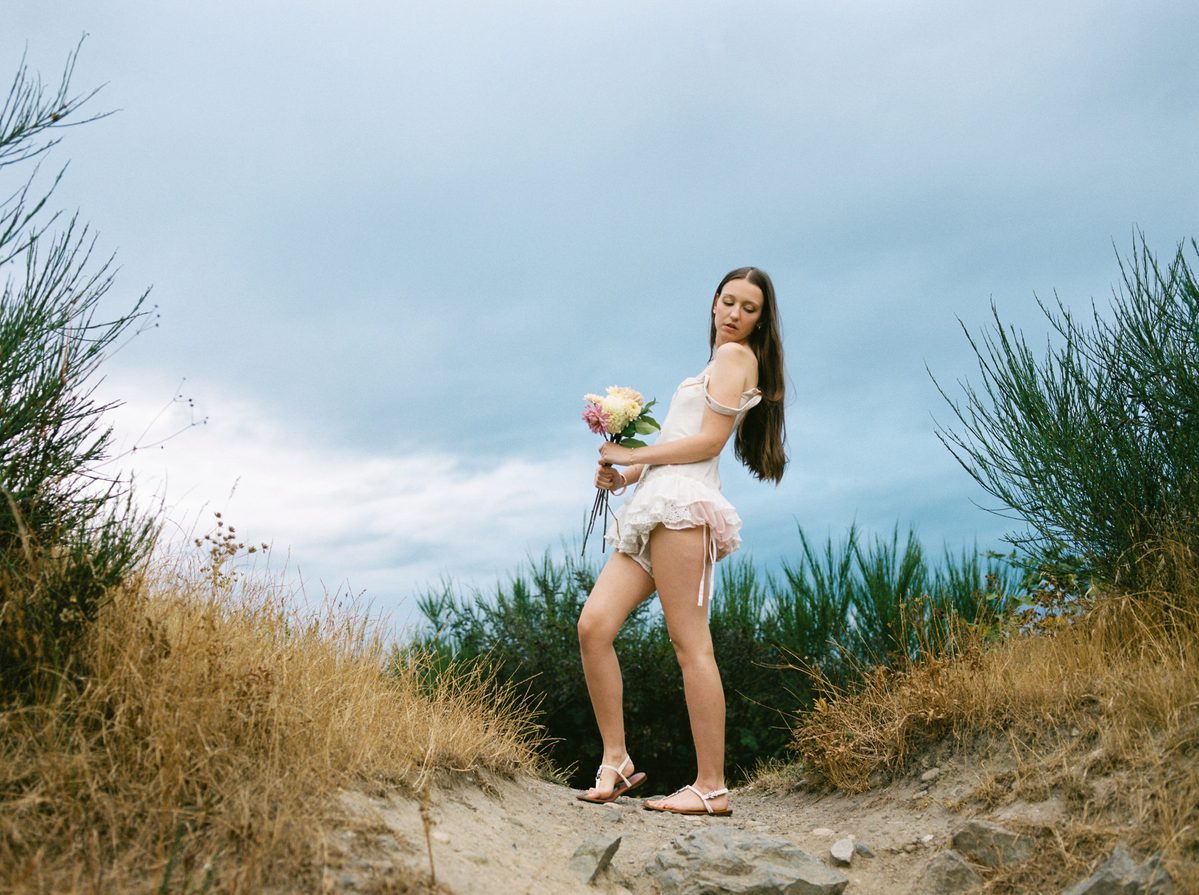
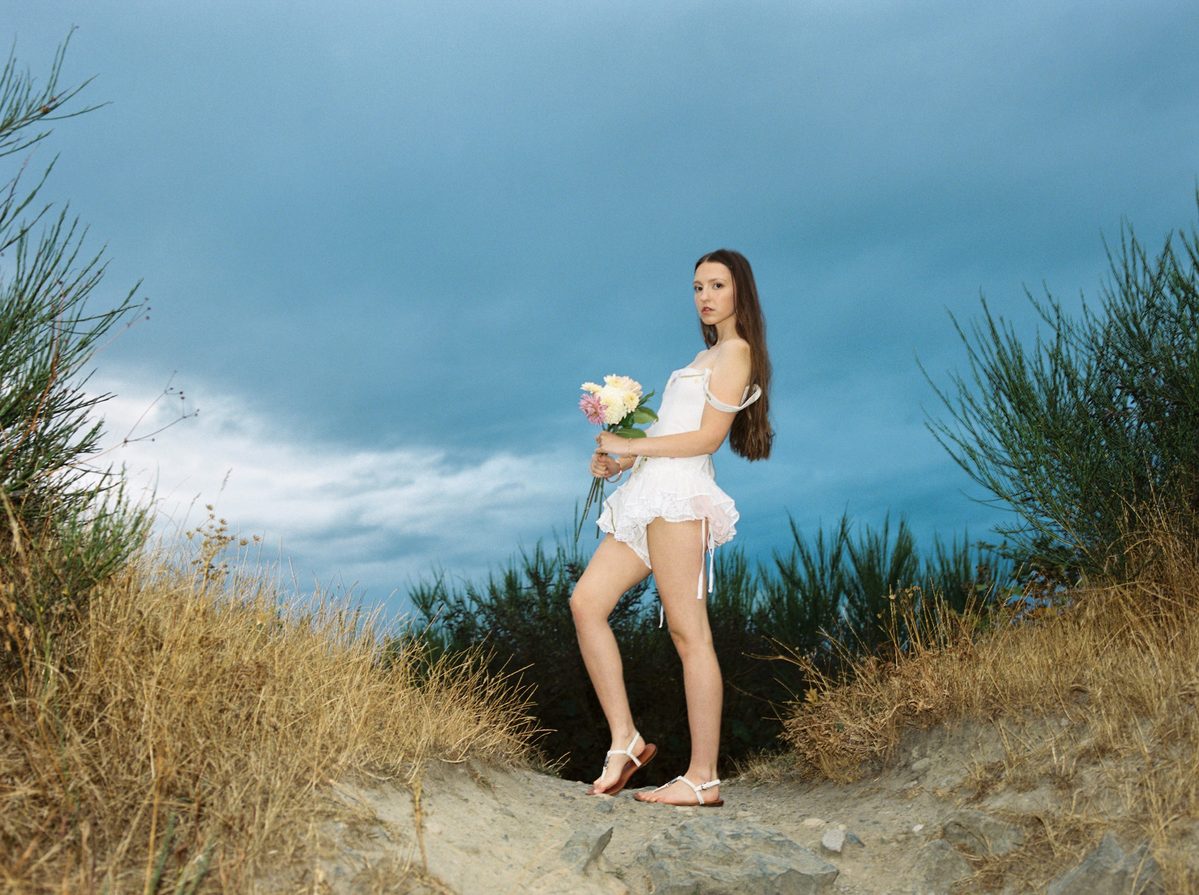
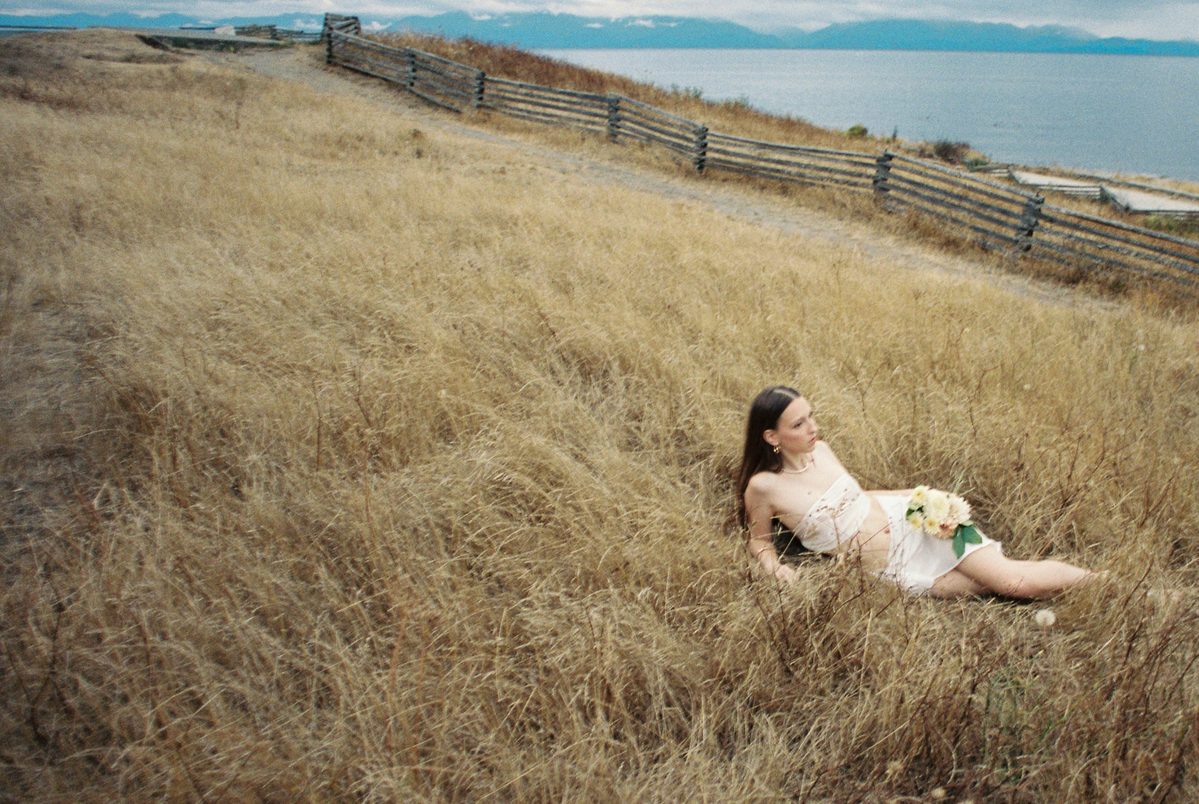
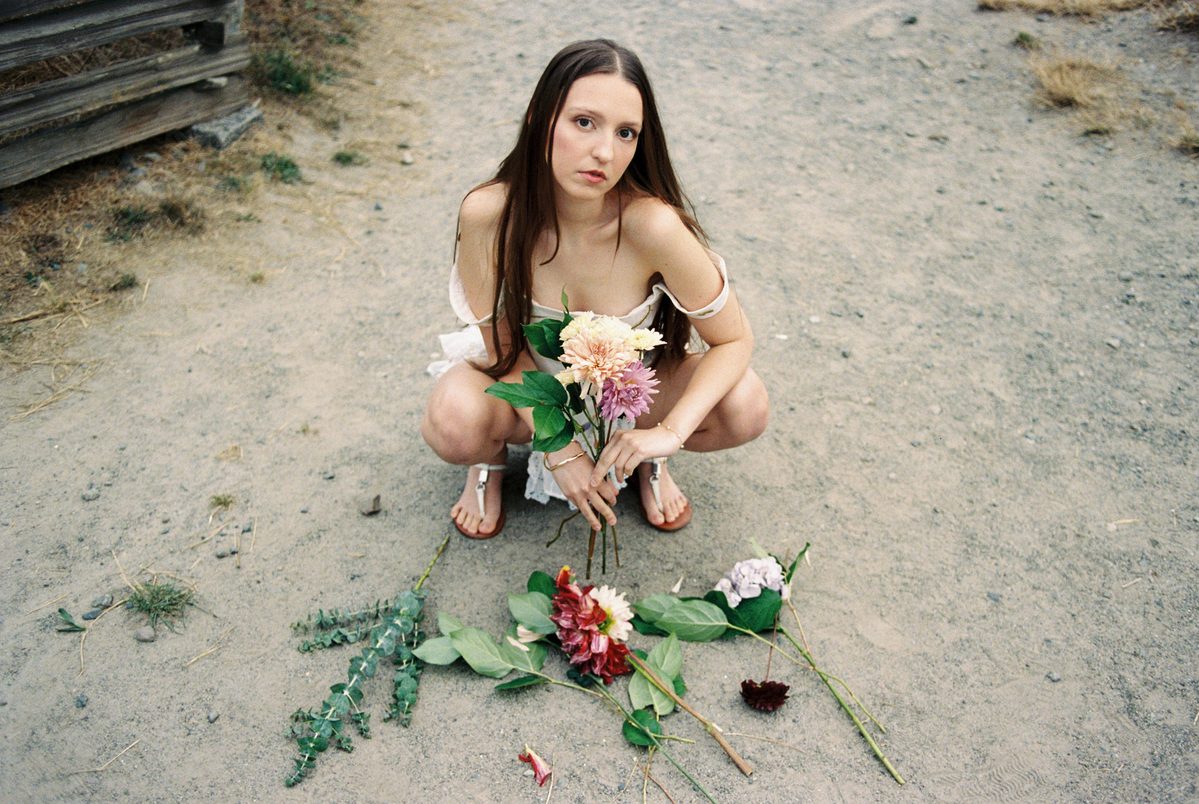
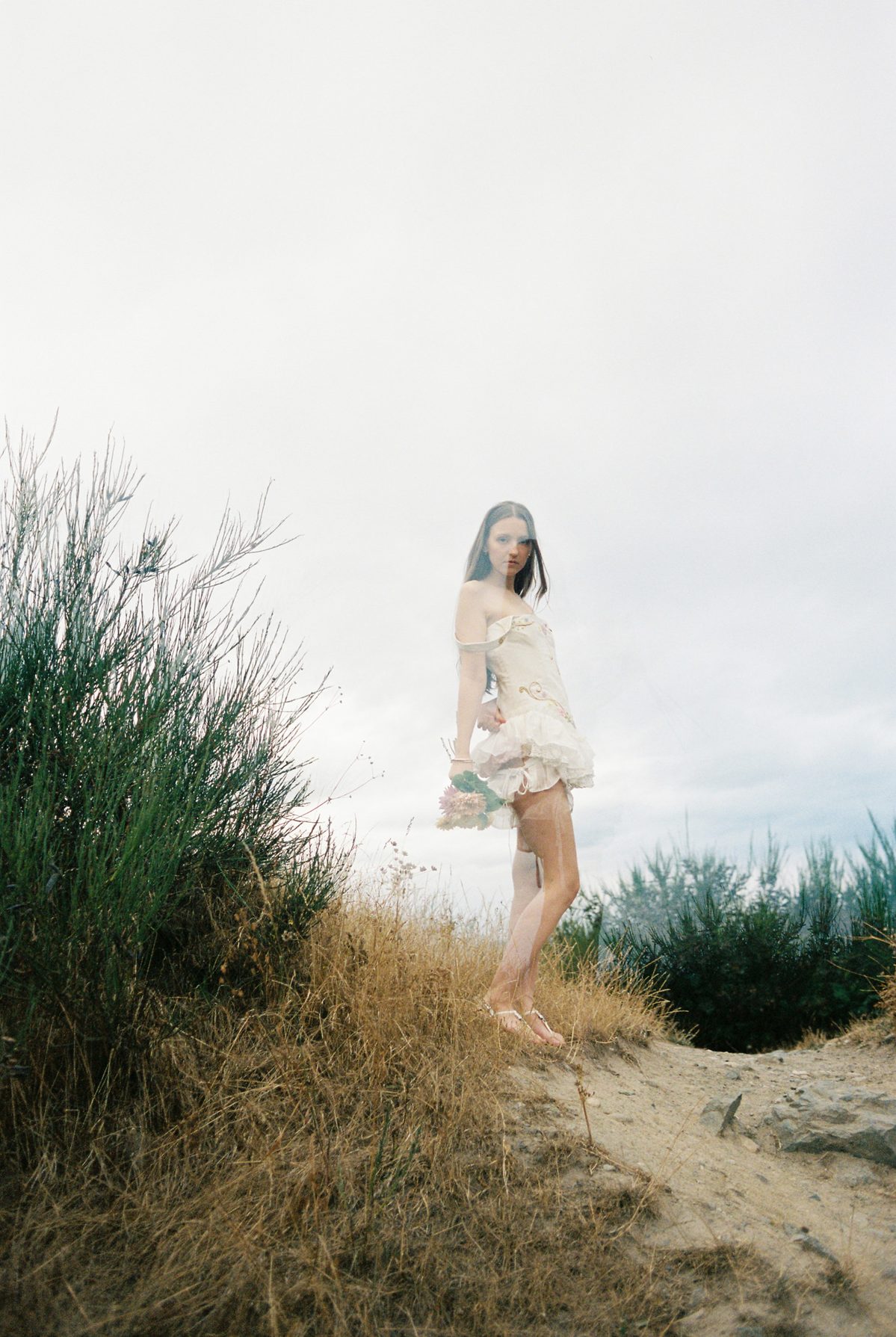
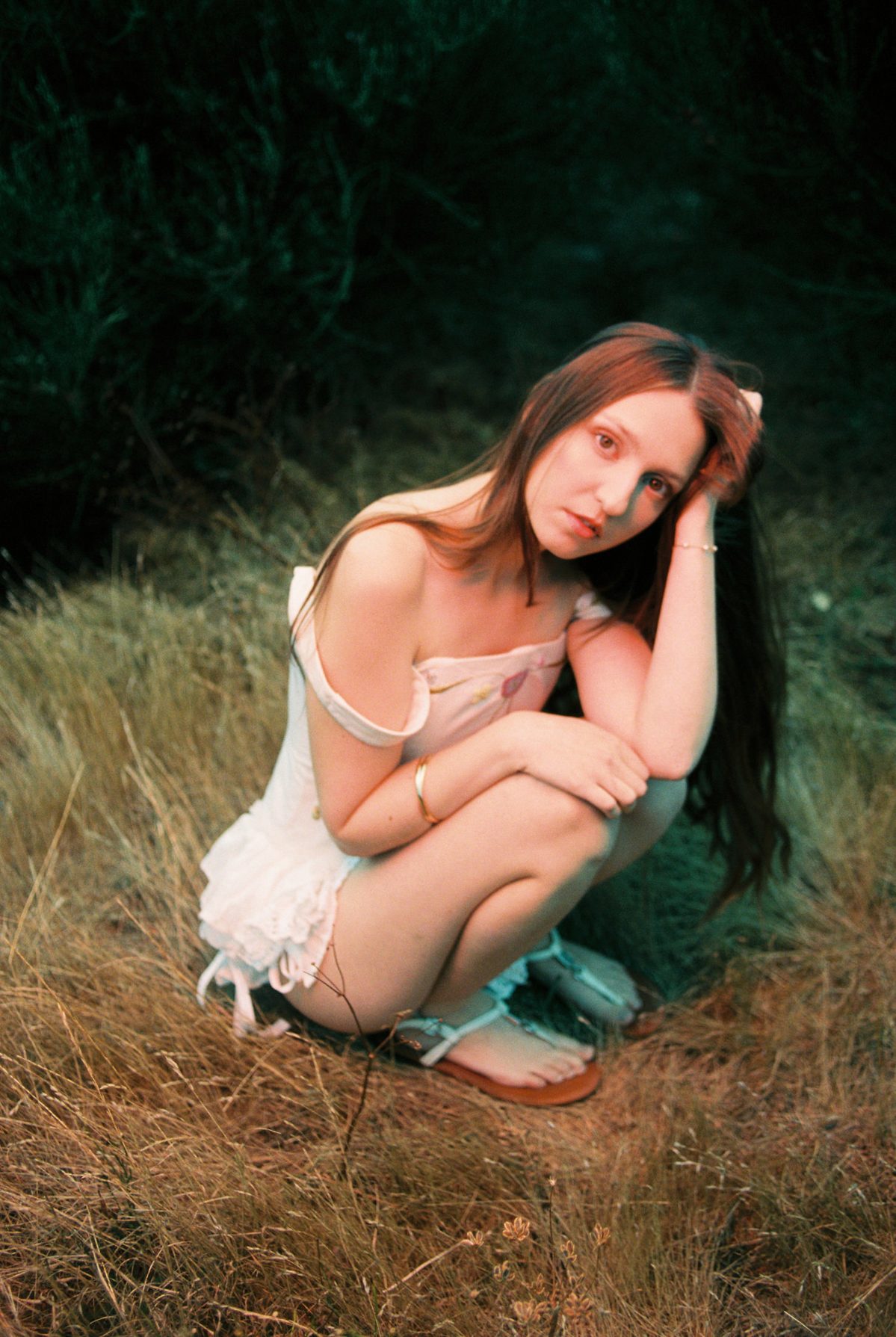
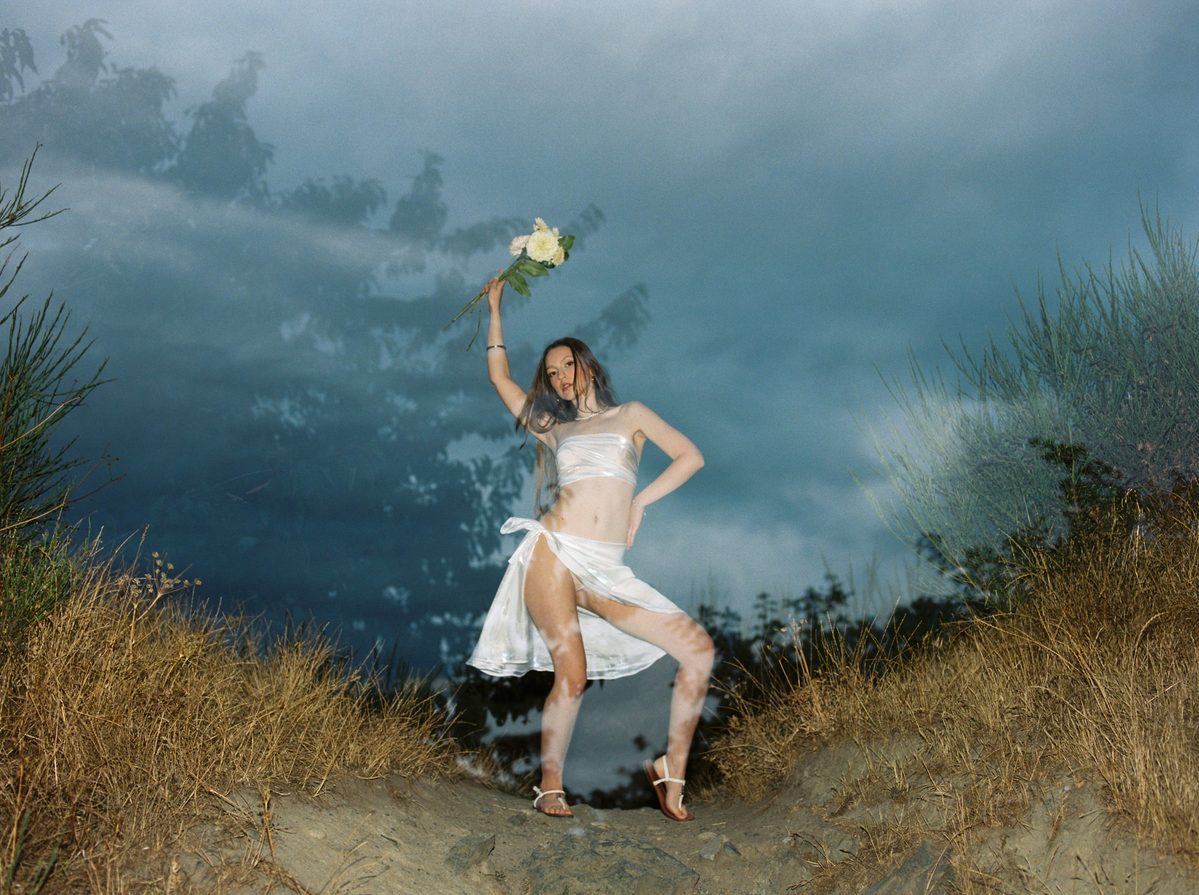
I’ll get more into how I compensated when it got dark, but first… here are photos we took before sunset. Besides removing the appearance of nipples (so I can tag these on Pinterest), all photos in this collection are straight out of camera – no Photoshop or AI used.
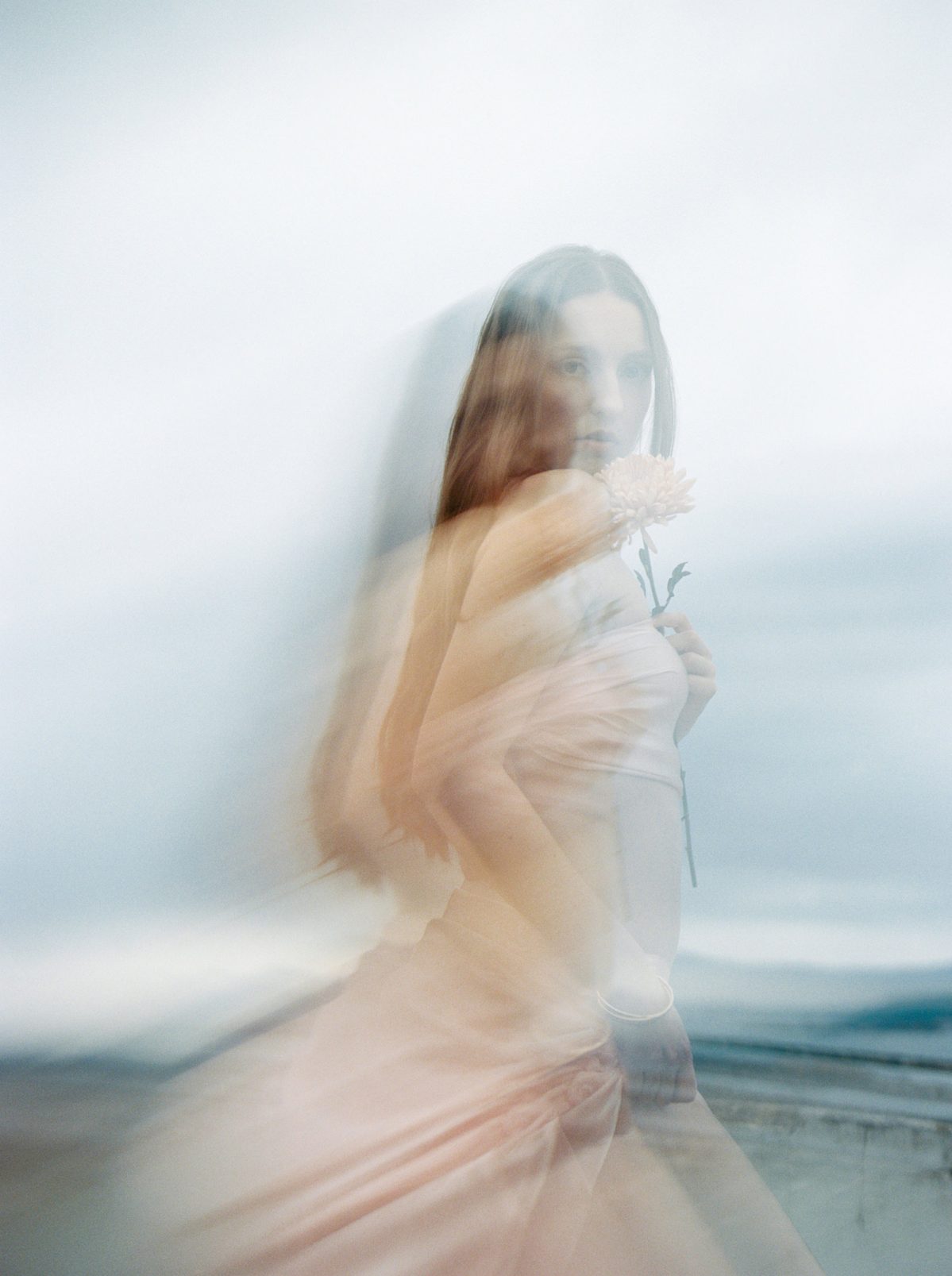
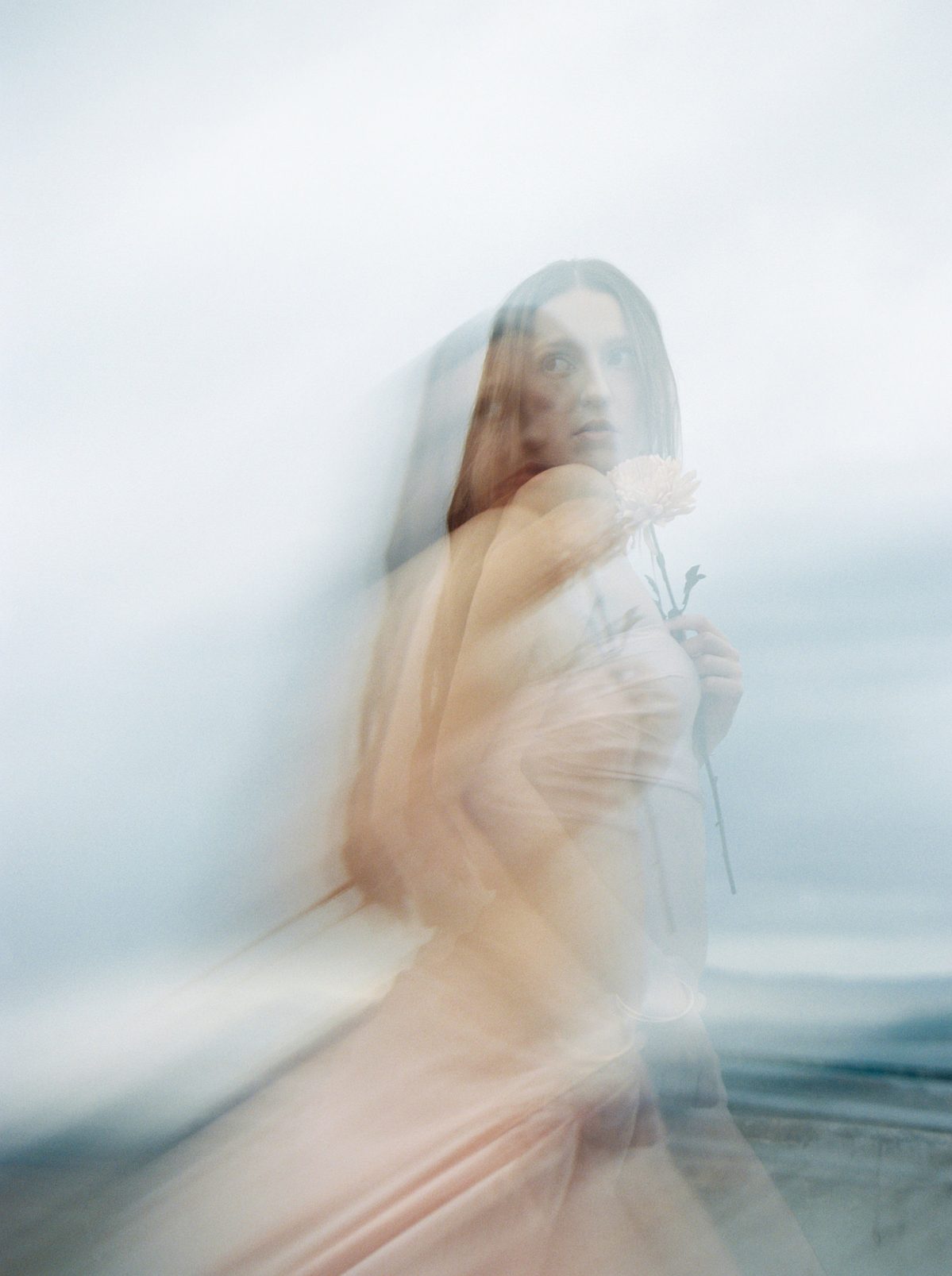
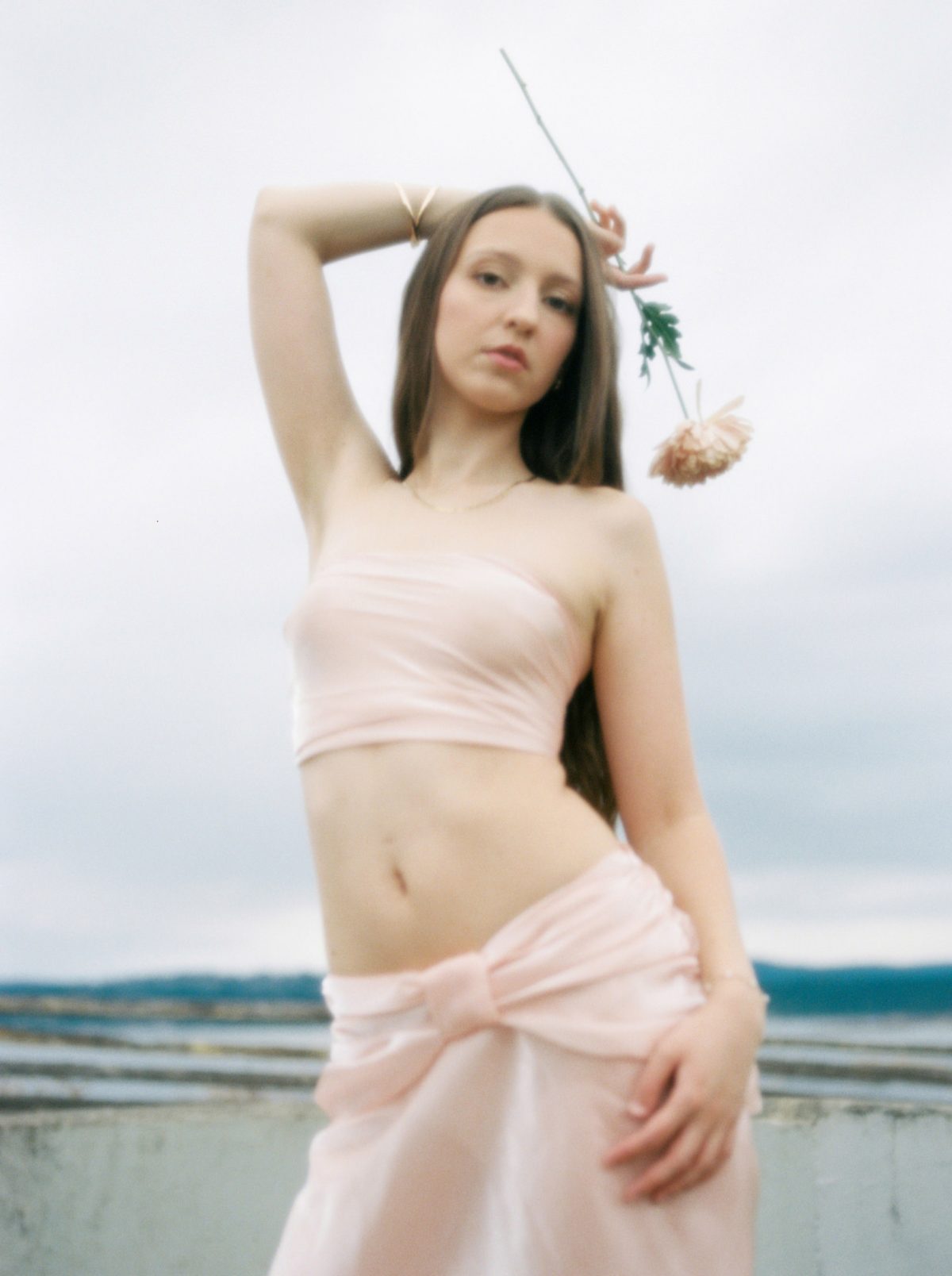
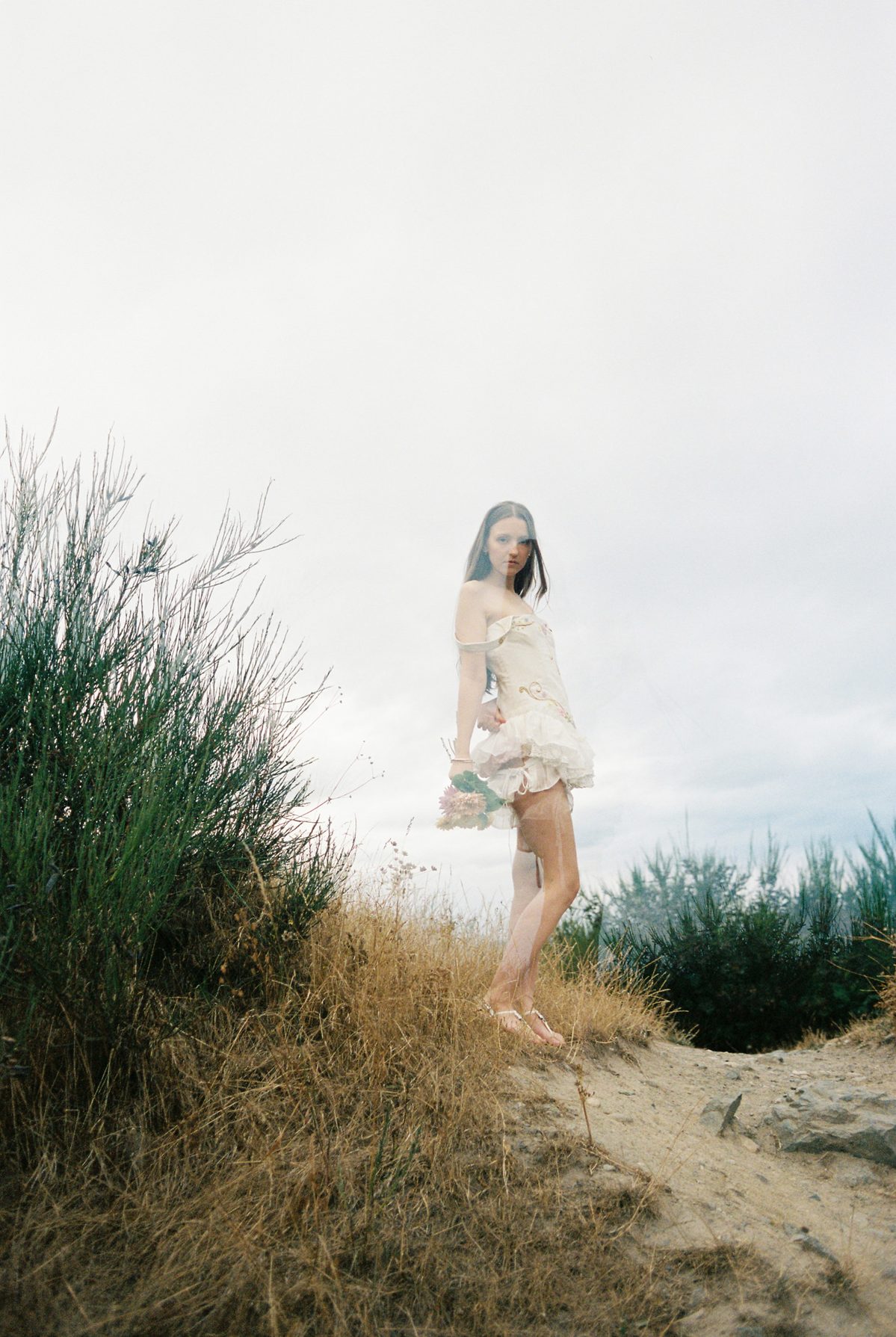
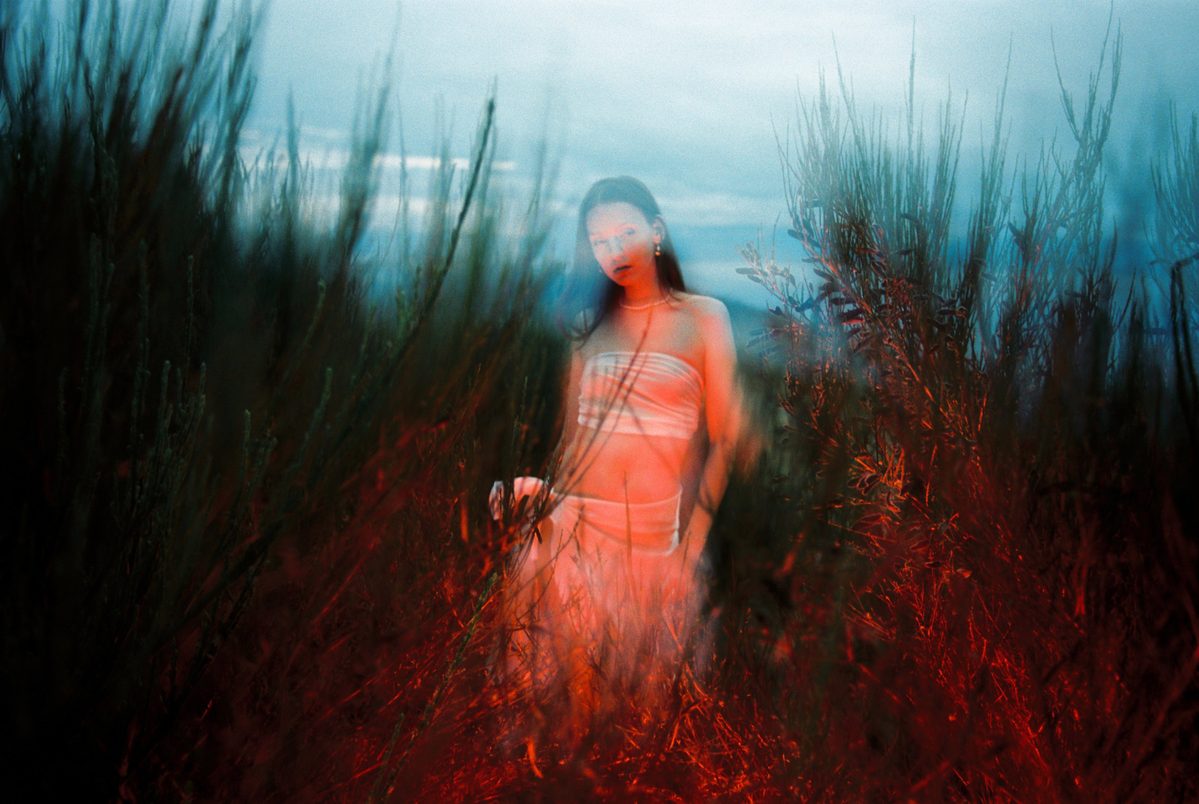
For the photos above, I used what’s called a “drag” filter which gives the impression of movement.
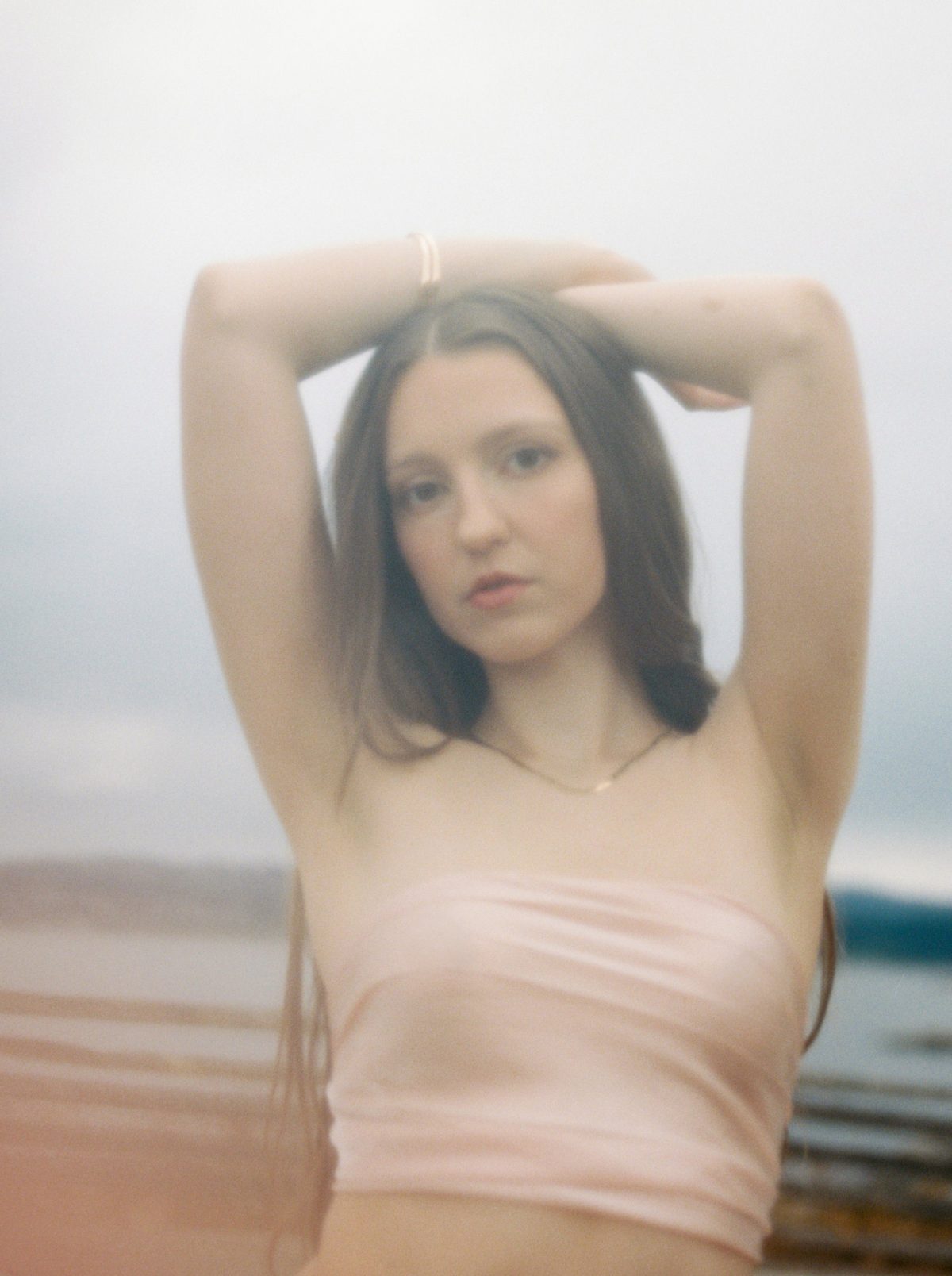
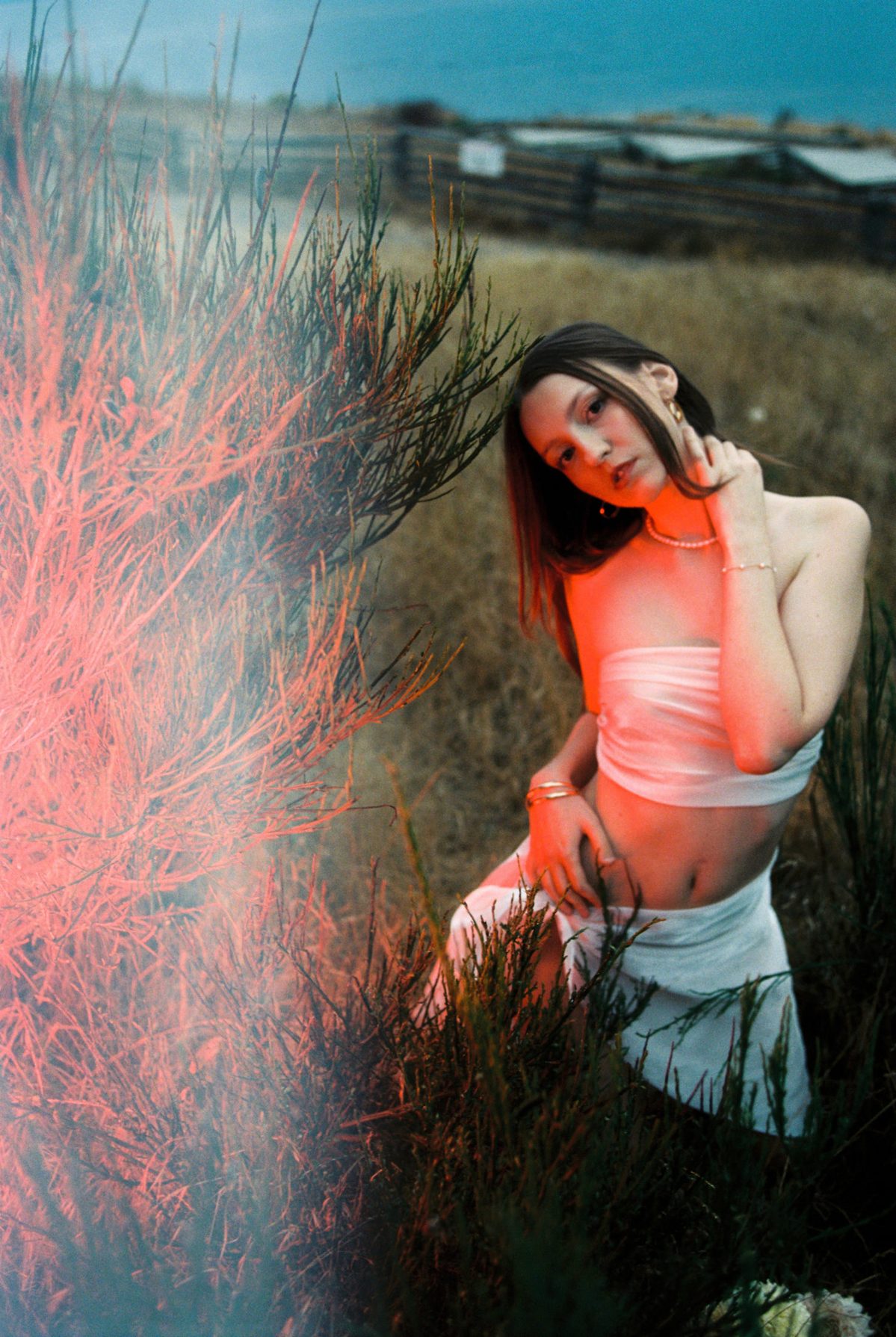
For these photos, I used a softening filter called a Black Mist Filter, and/or quite possibly put a nylon stocking in front of the lens.
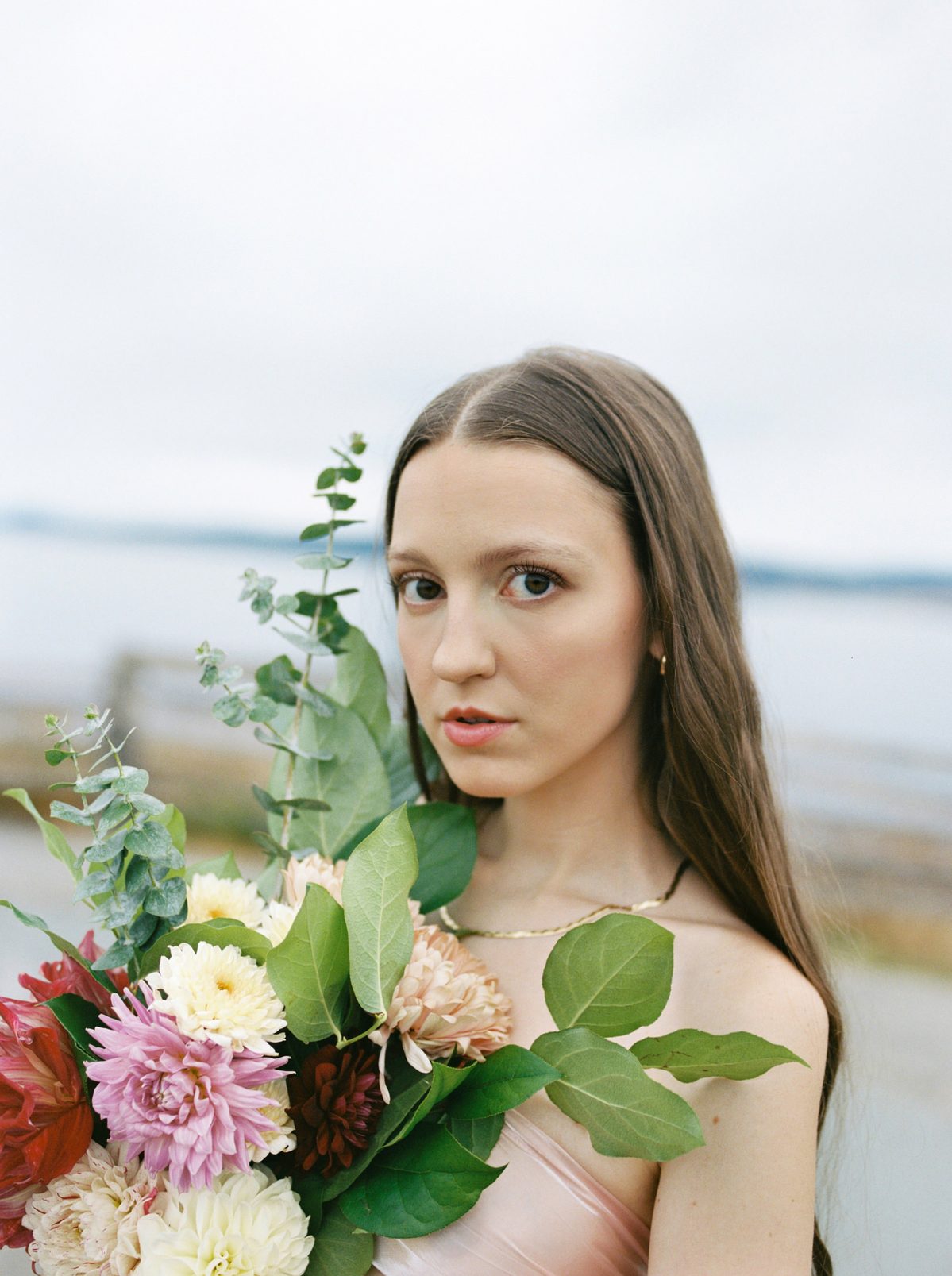
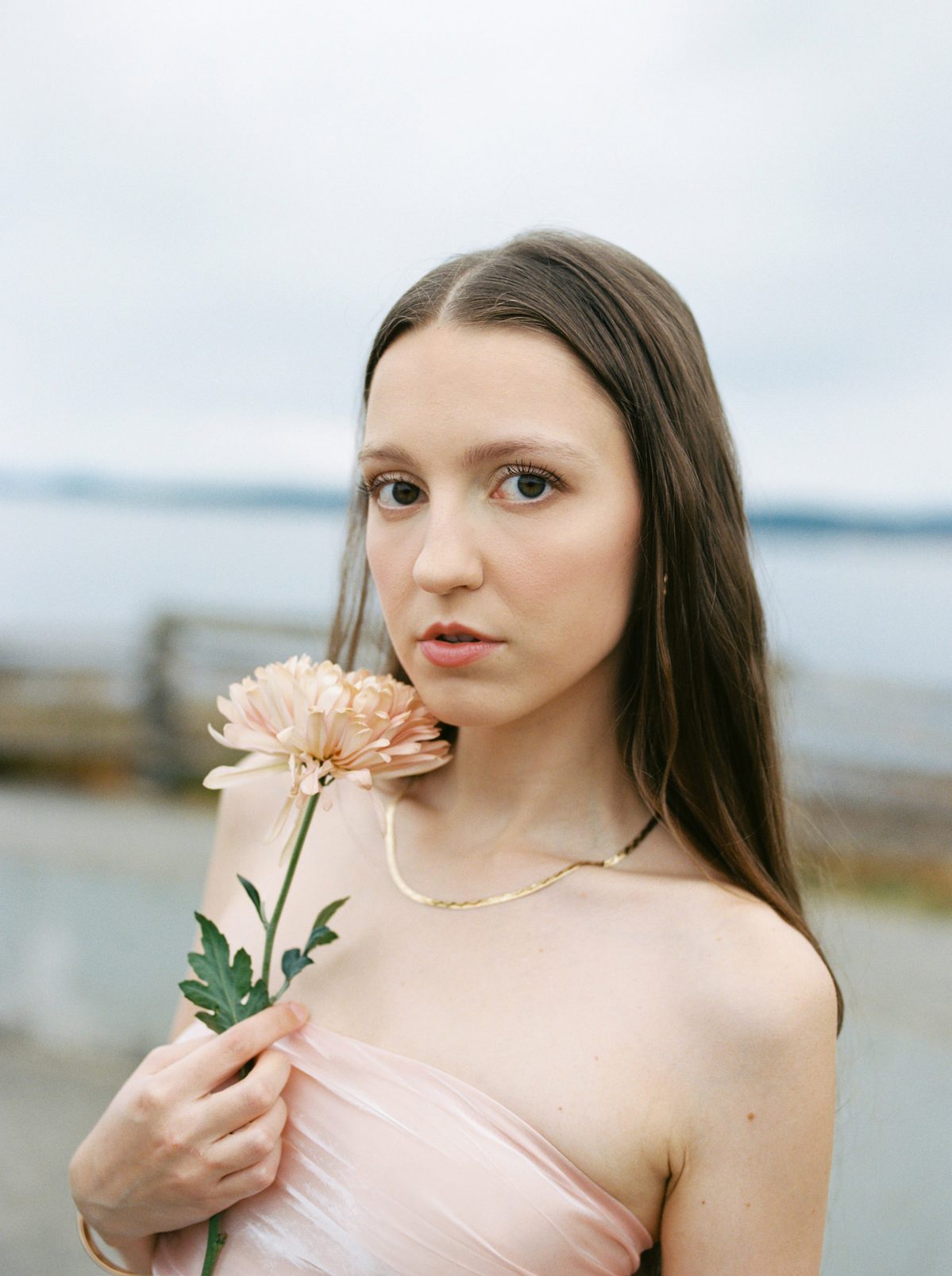
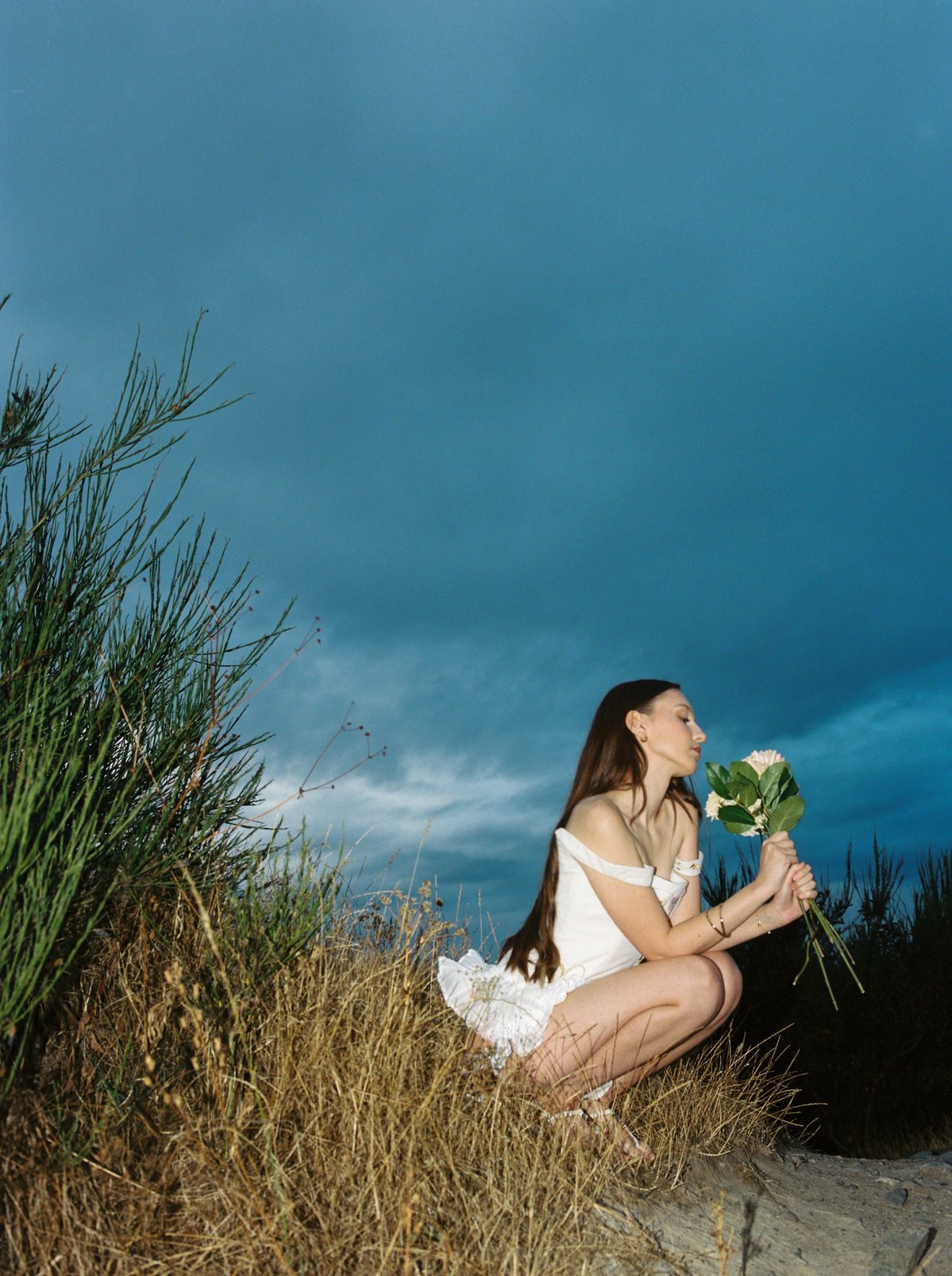
Kodak Ektacolor Pro 400 (formerly called Kodak Portra Pro) is designed specifically for portrait photography, giving subjects creamy skin, especially when it’s at least one stop over-exposed. During the early part of our session I rated the film at 200ISO rather than box speed to let more light in.
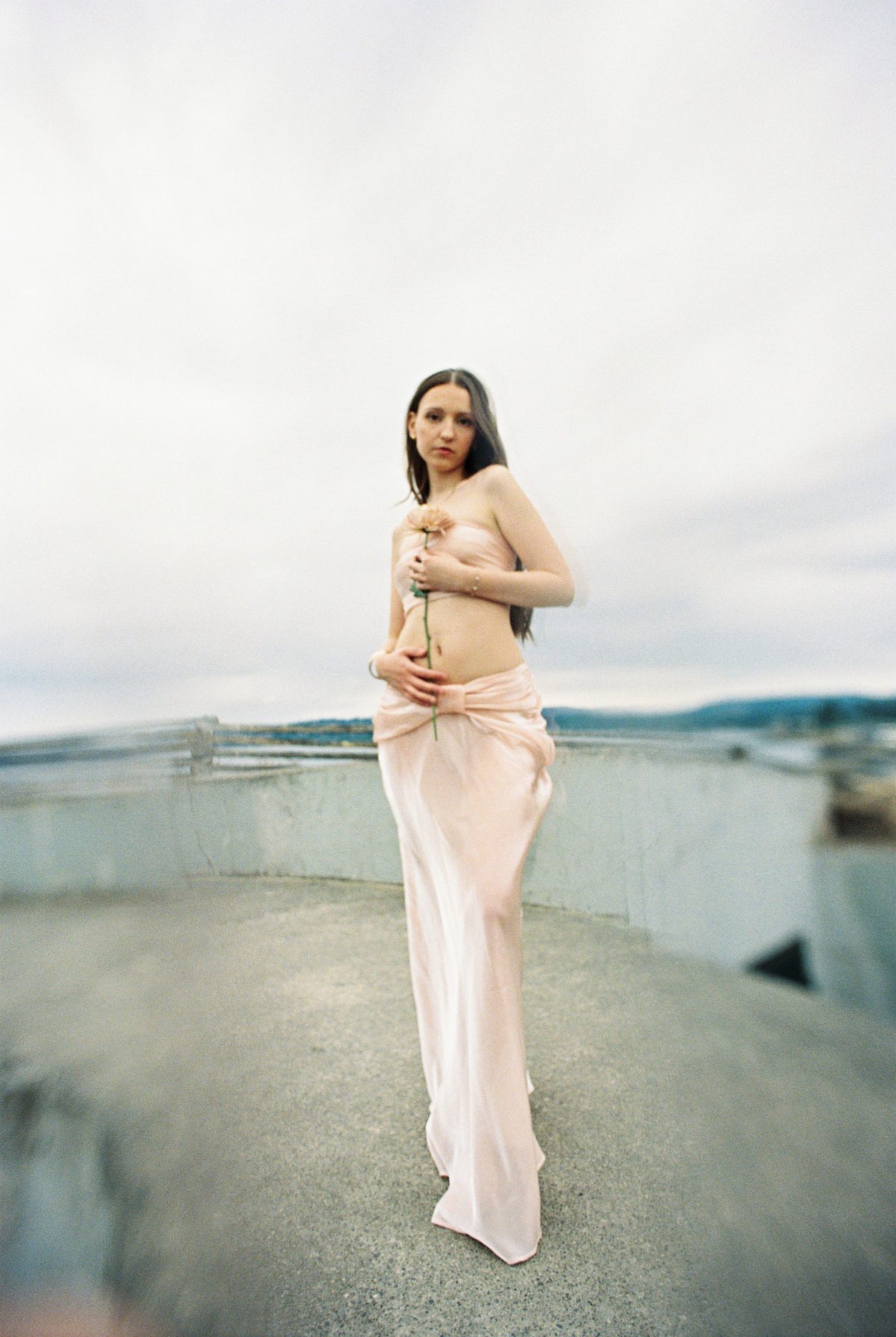
In the next photo I used what’s called a centre split diopter, which distorts the left and right side of the image, while keeping a small slice of the centre in focus.
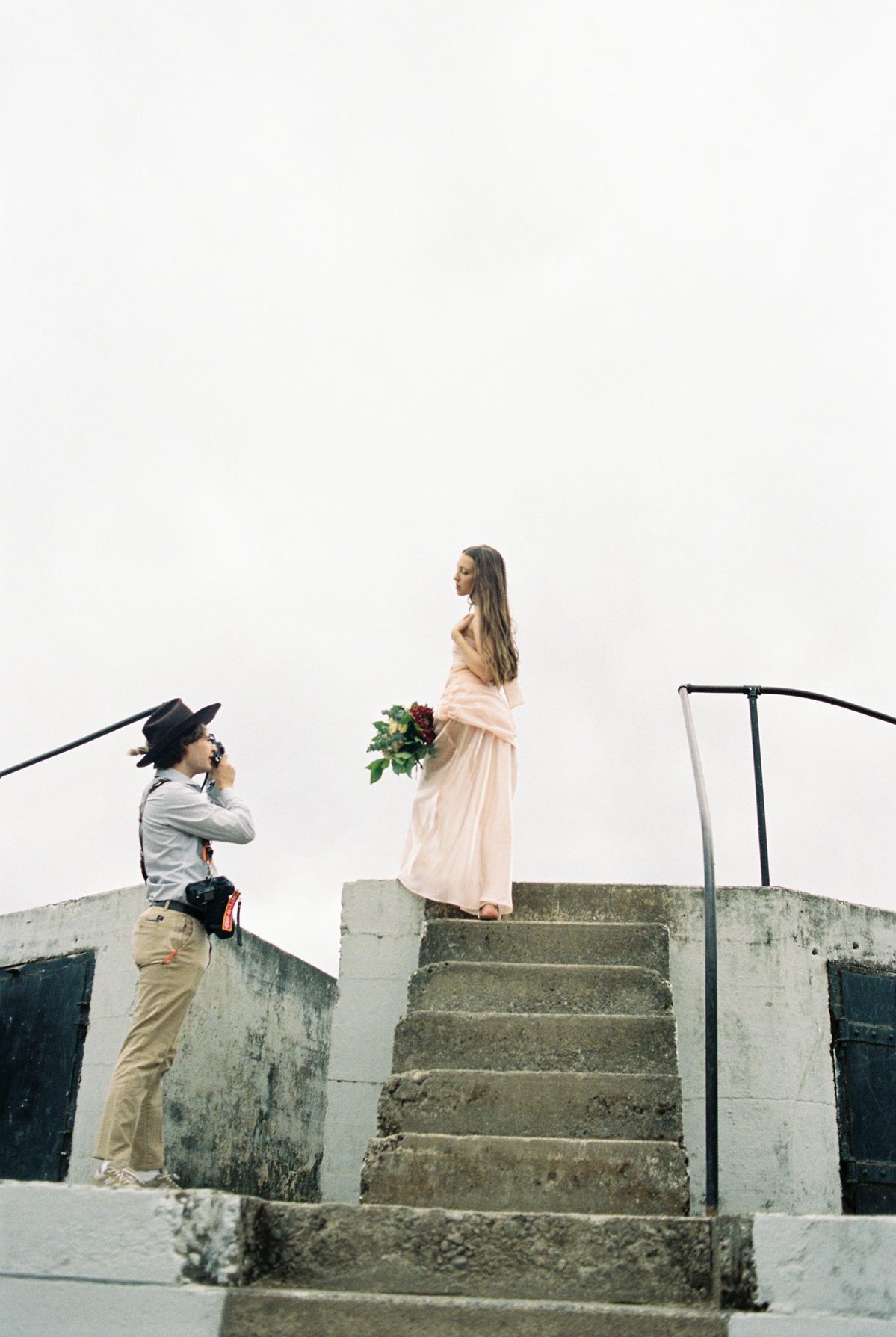
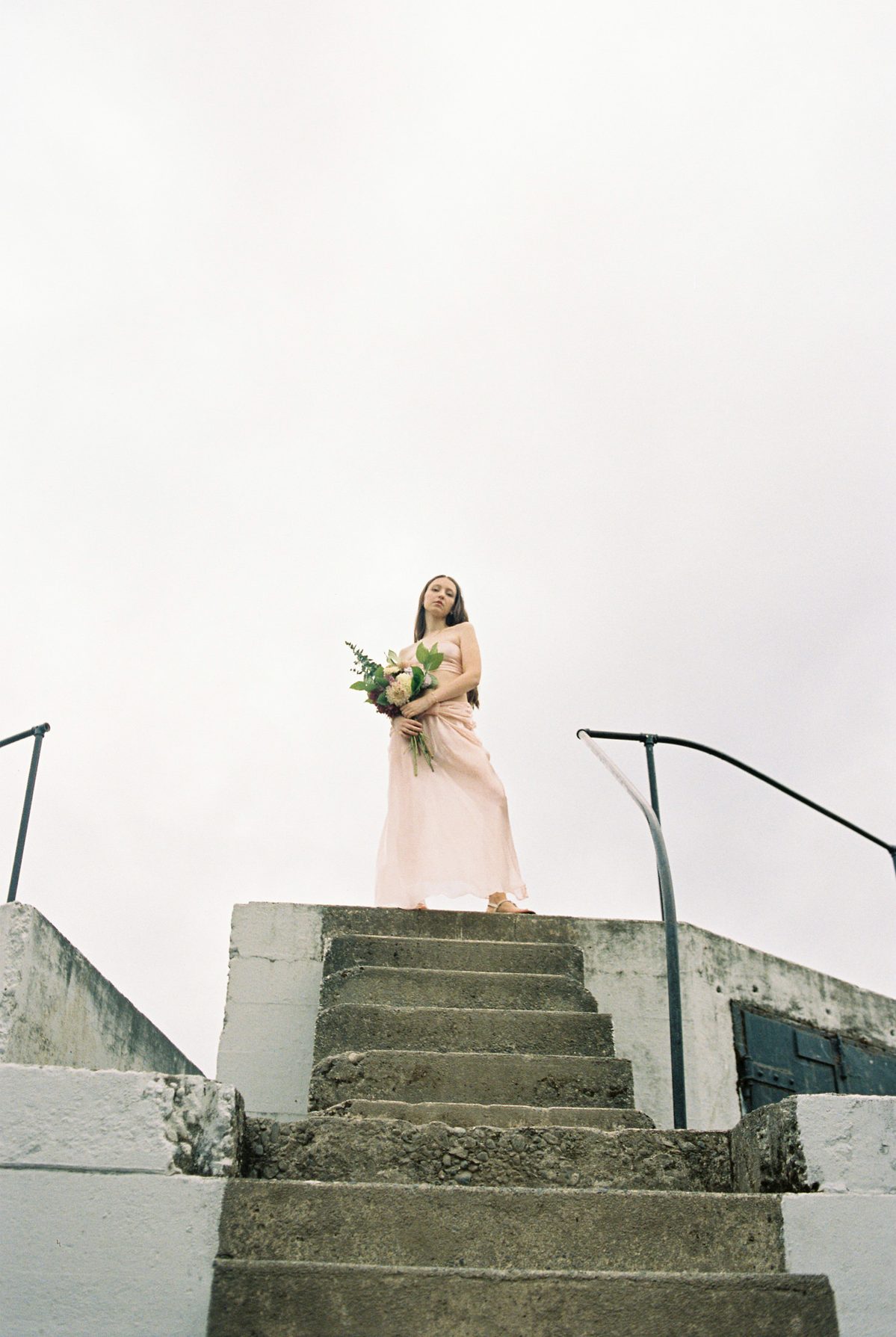
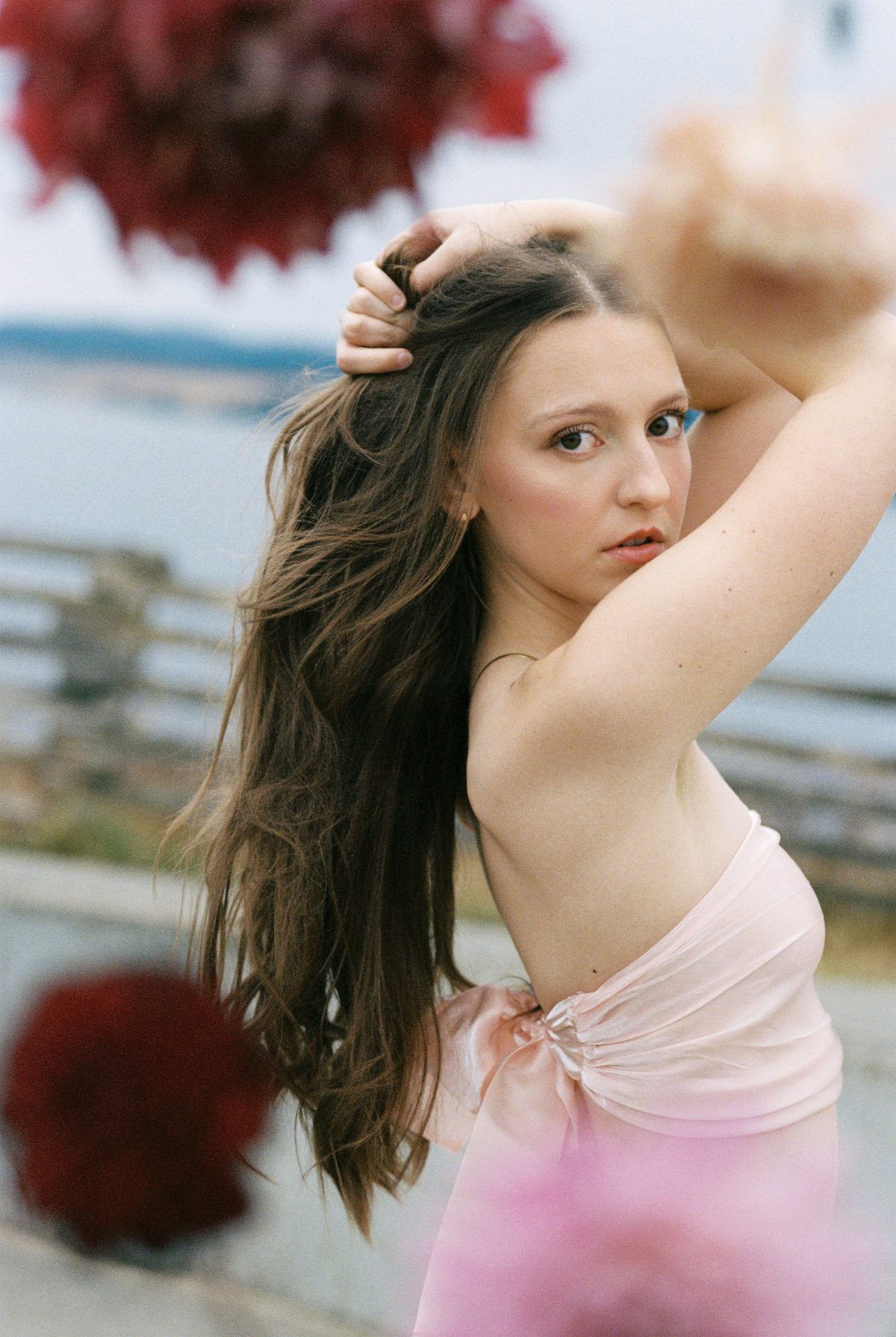
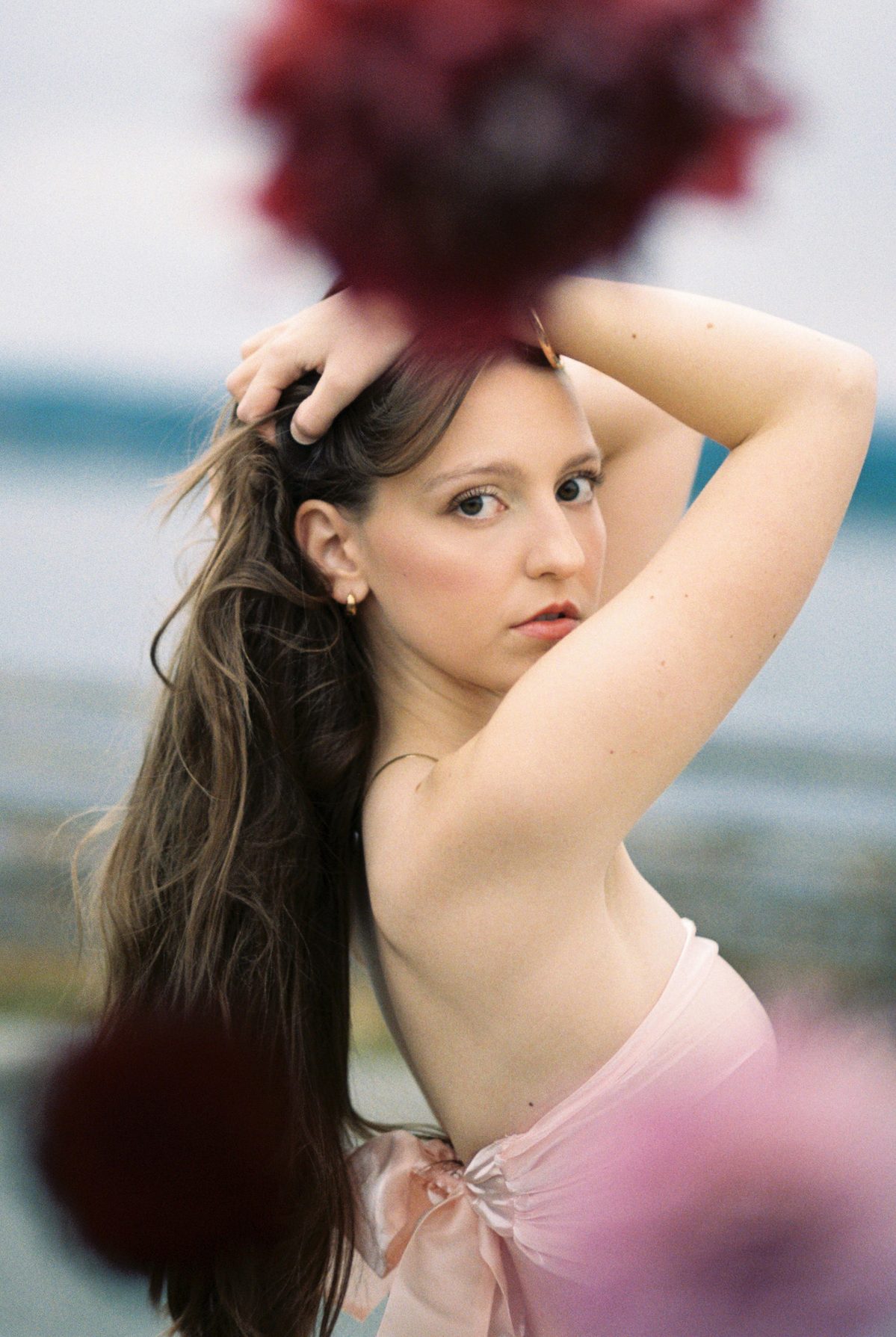
Above, I had a slower shutter (probably around 1/30 or 1/15th sec and Matthew quickly shook the flowers in front of Ana.
As it started to get darker, I began to incorporate off-camera flash. The next set of photos show exposures with no flash, and those with flash. I kept the exposures the same and you can really notice the difference in look and feel when the flash was added.
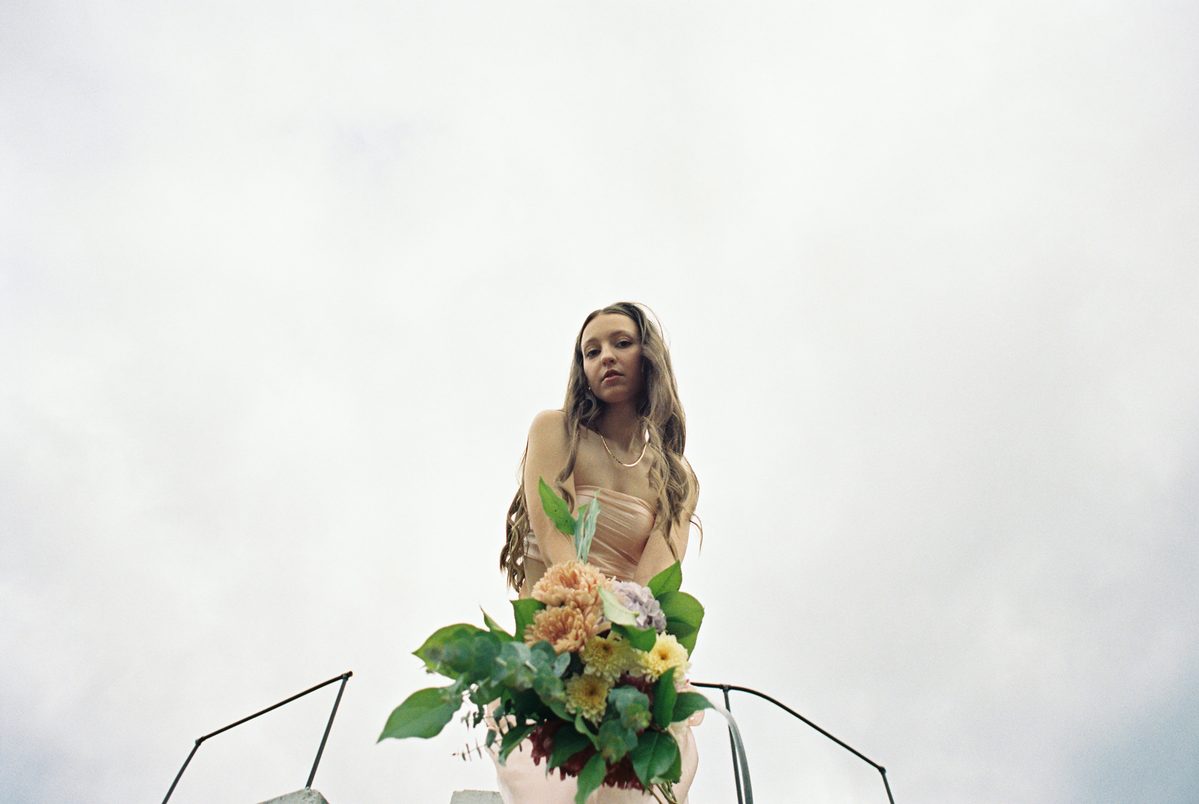
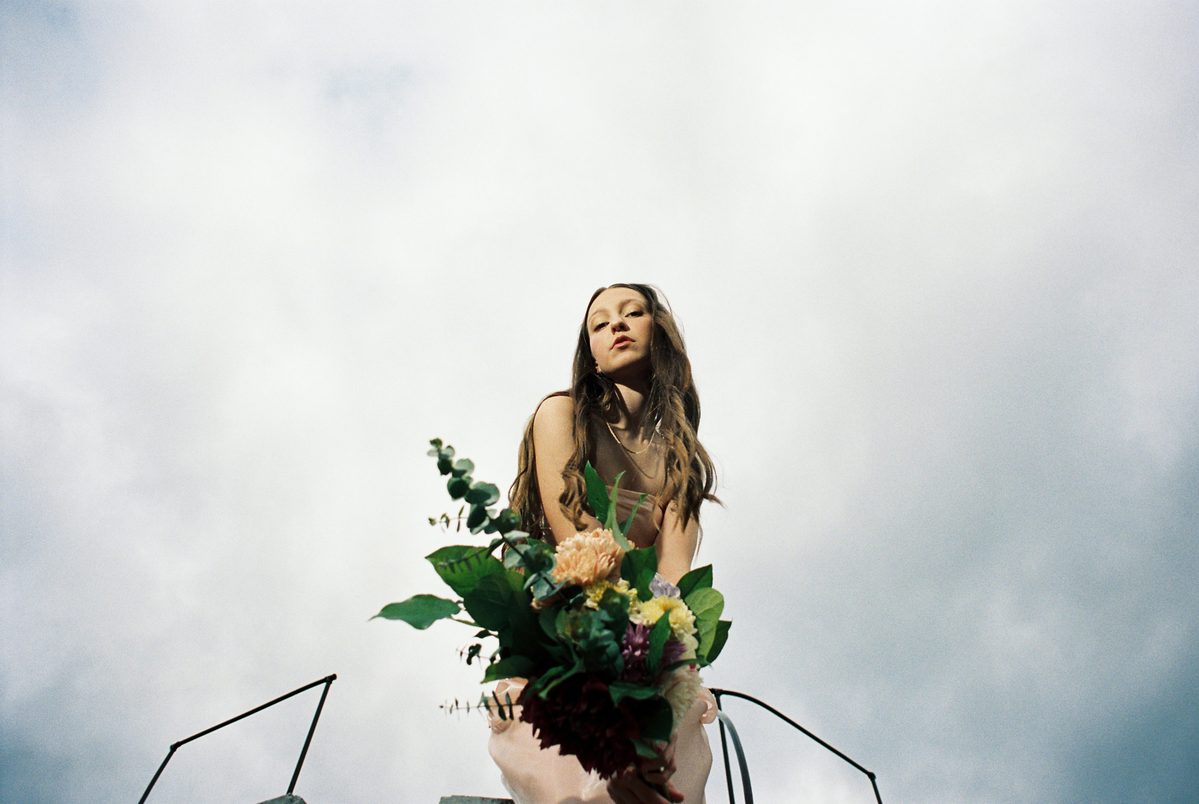
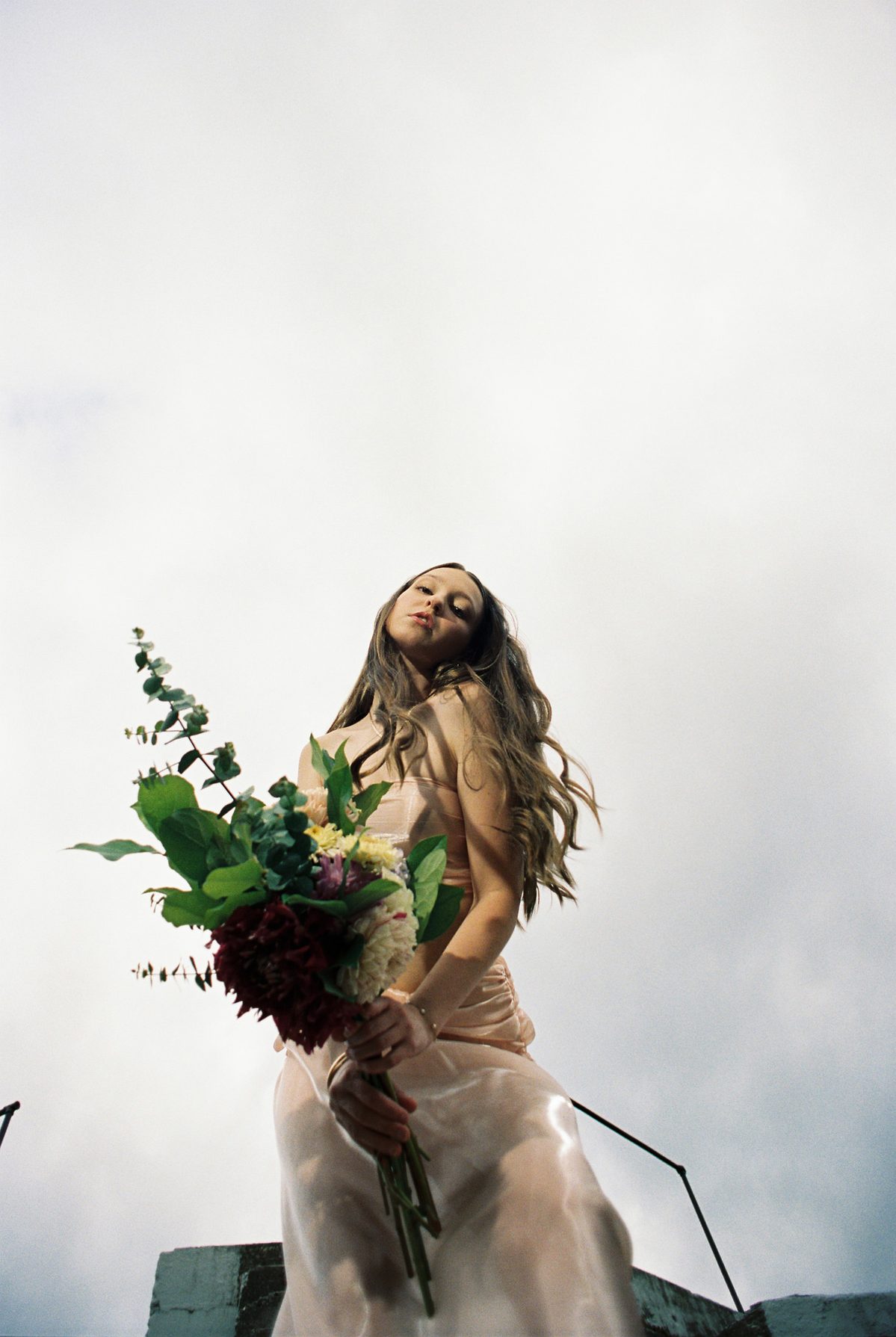
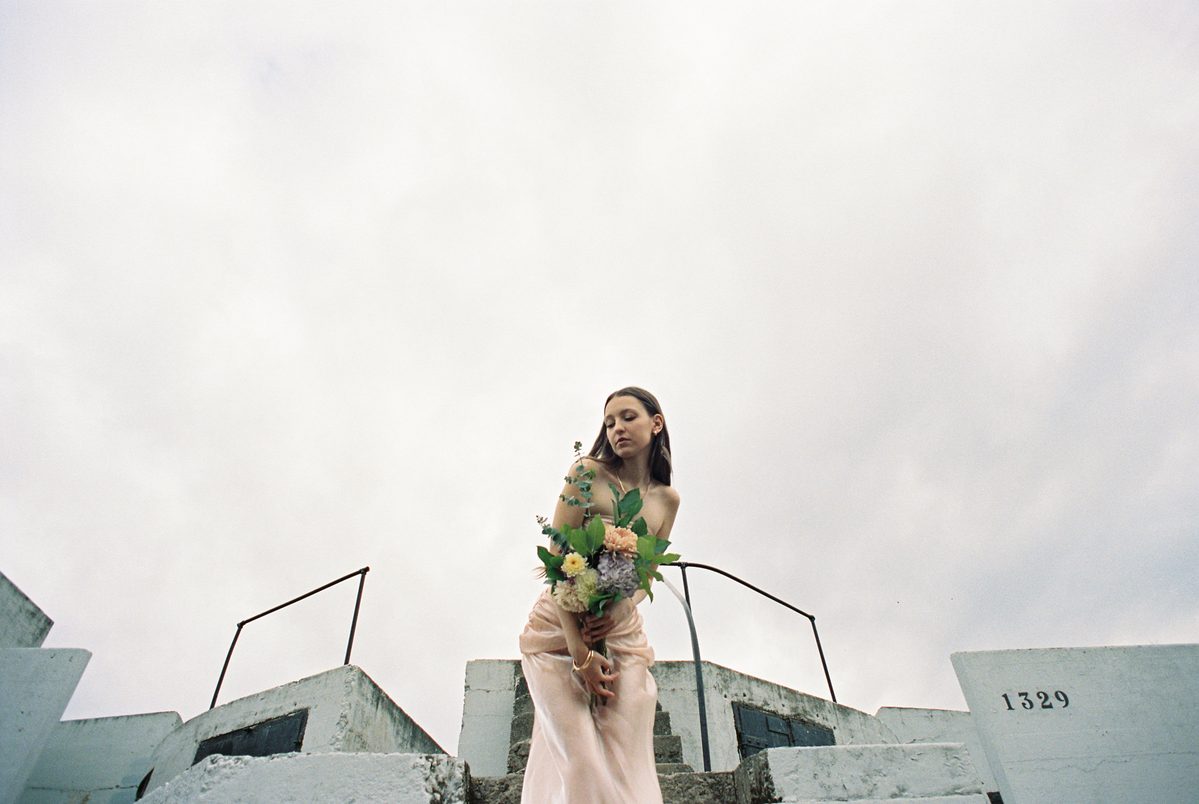
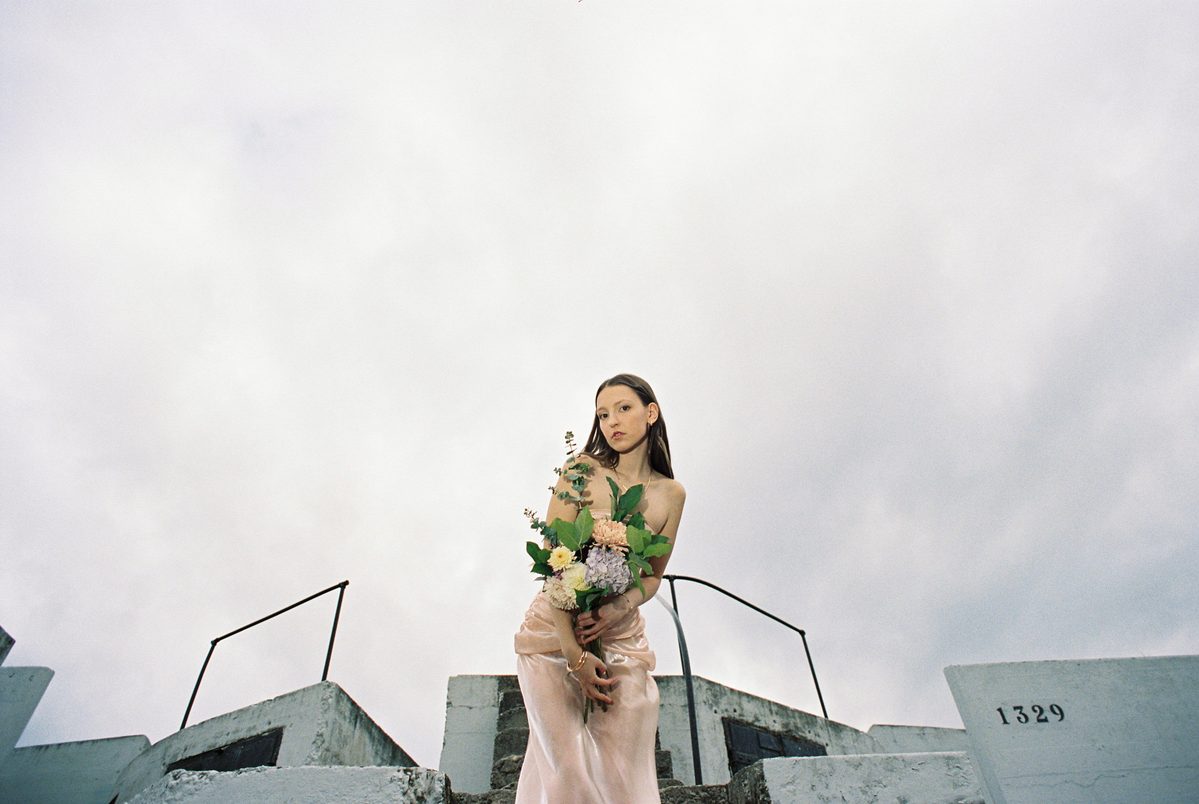
Flash: Nikon SB28 Speedlight (originally manufactured in 1997)
Off camera shoe cord: Nikon SC-29 (originally manufactured in 2003)
This was the first time I had used either the flash or the off-camera shoe cord. Luckily, they both worked perfectly despite their age.
Ana wore the blue corset dress just as the light was getting more dim, so I used either off camera flash or slow shutter speeds (or both) for these reflection photos.
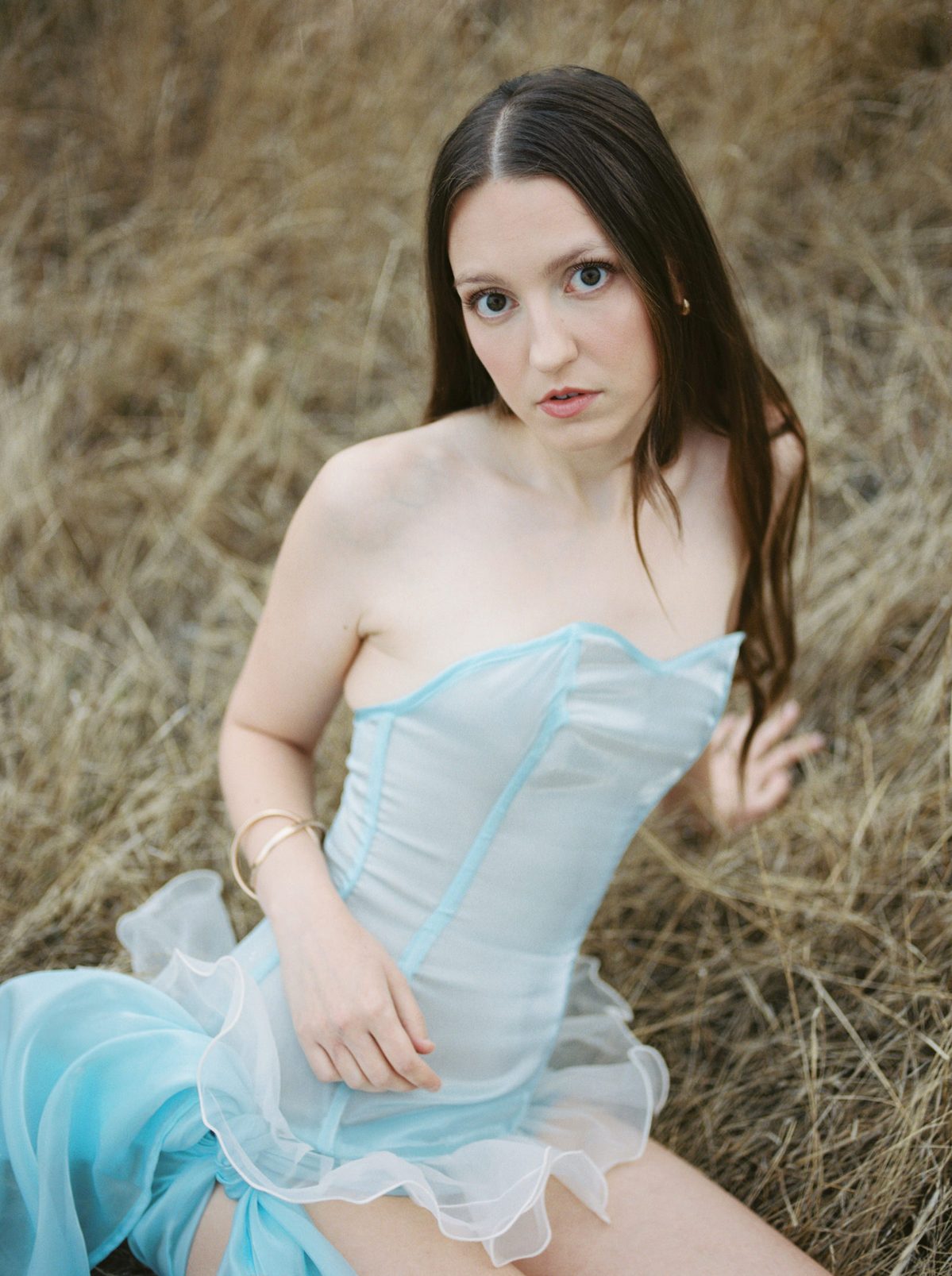
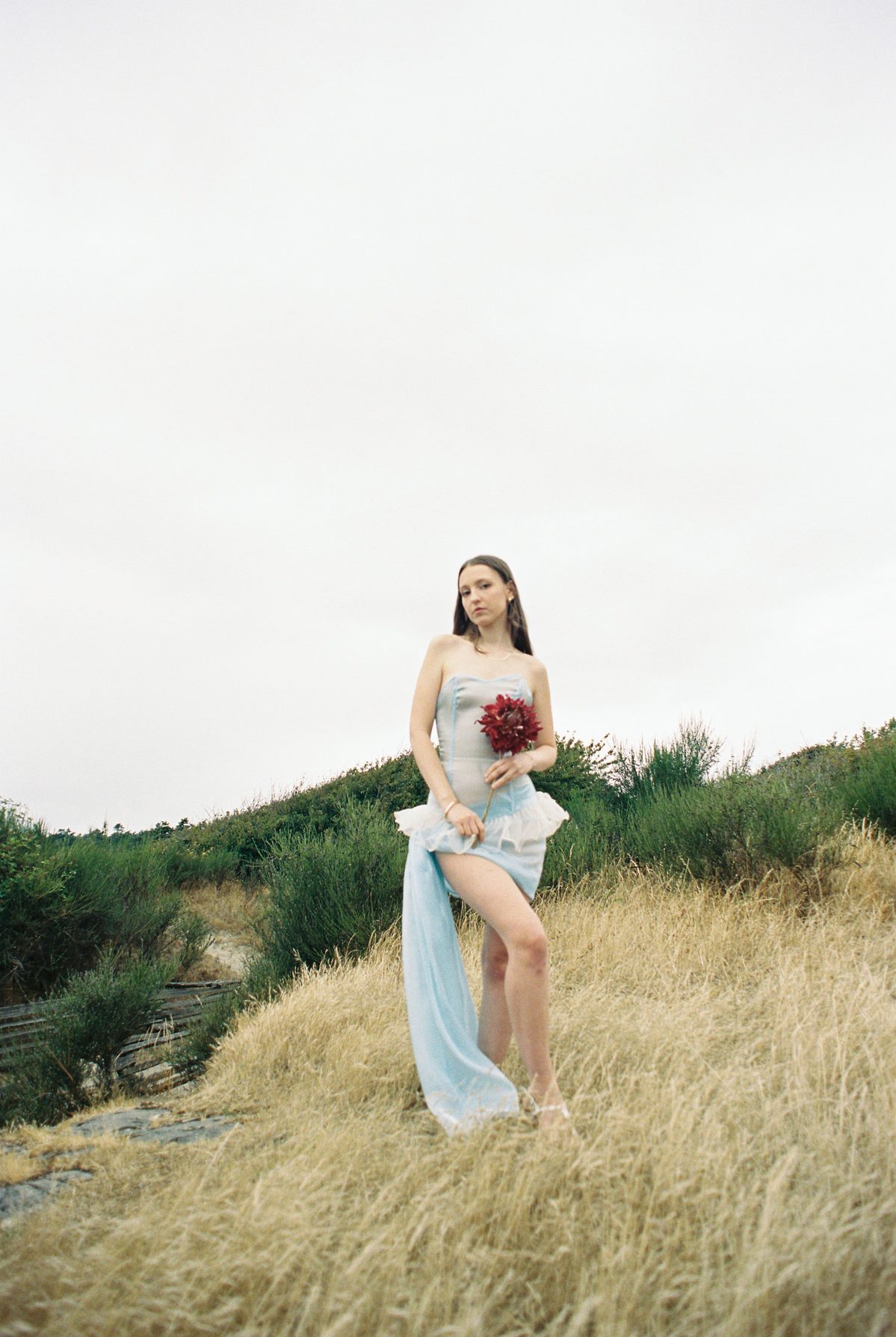
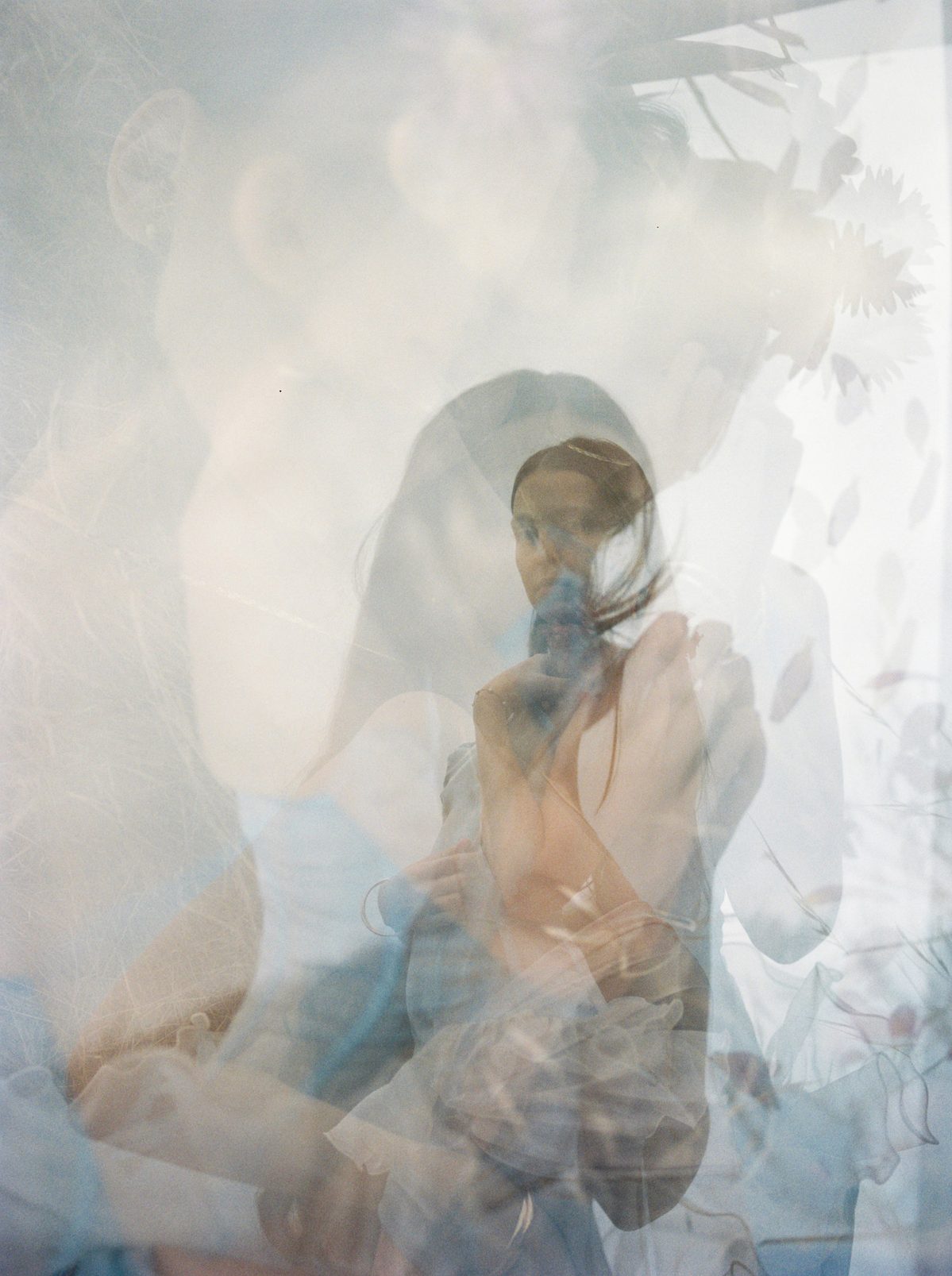
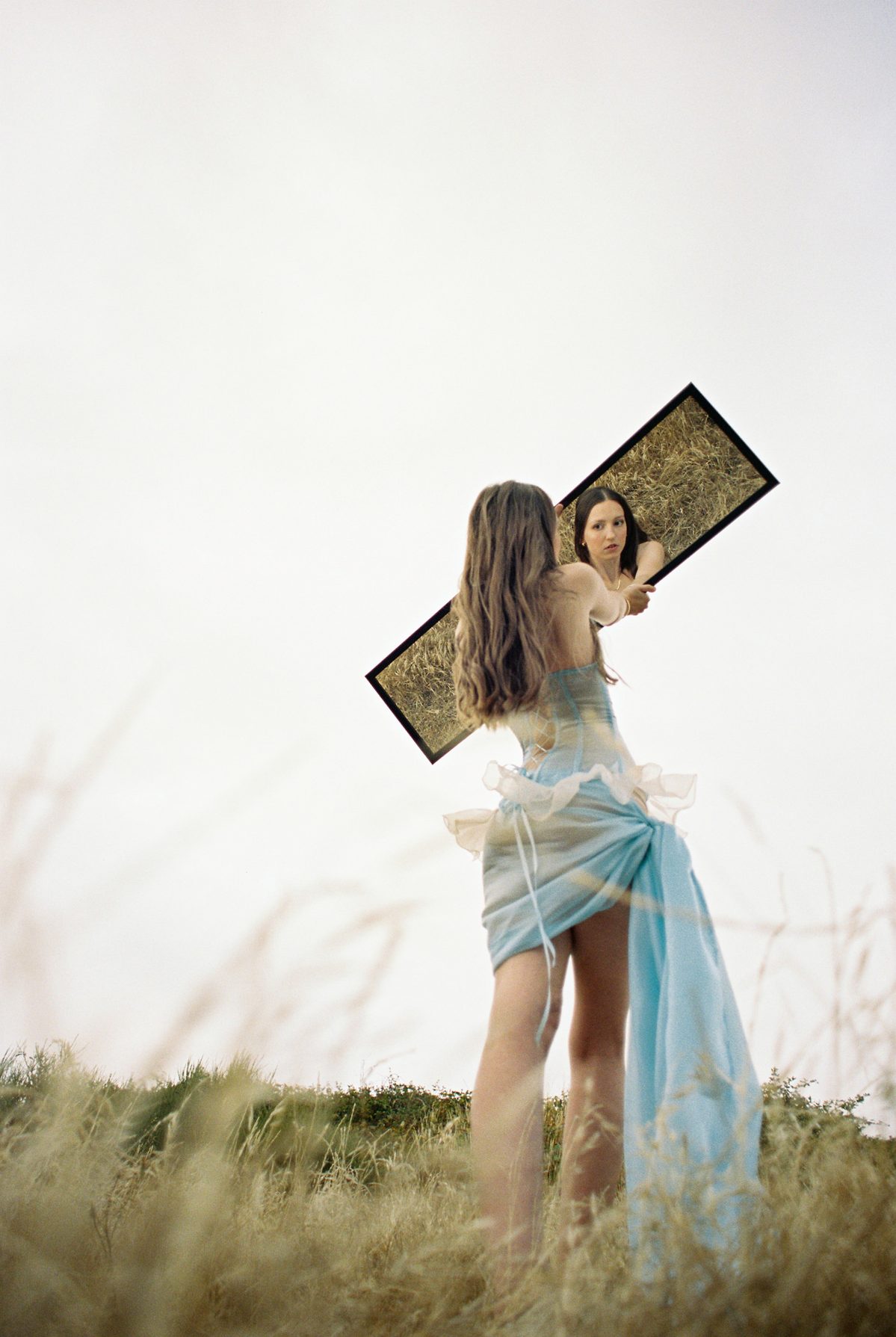
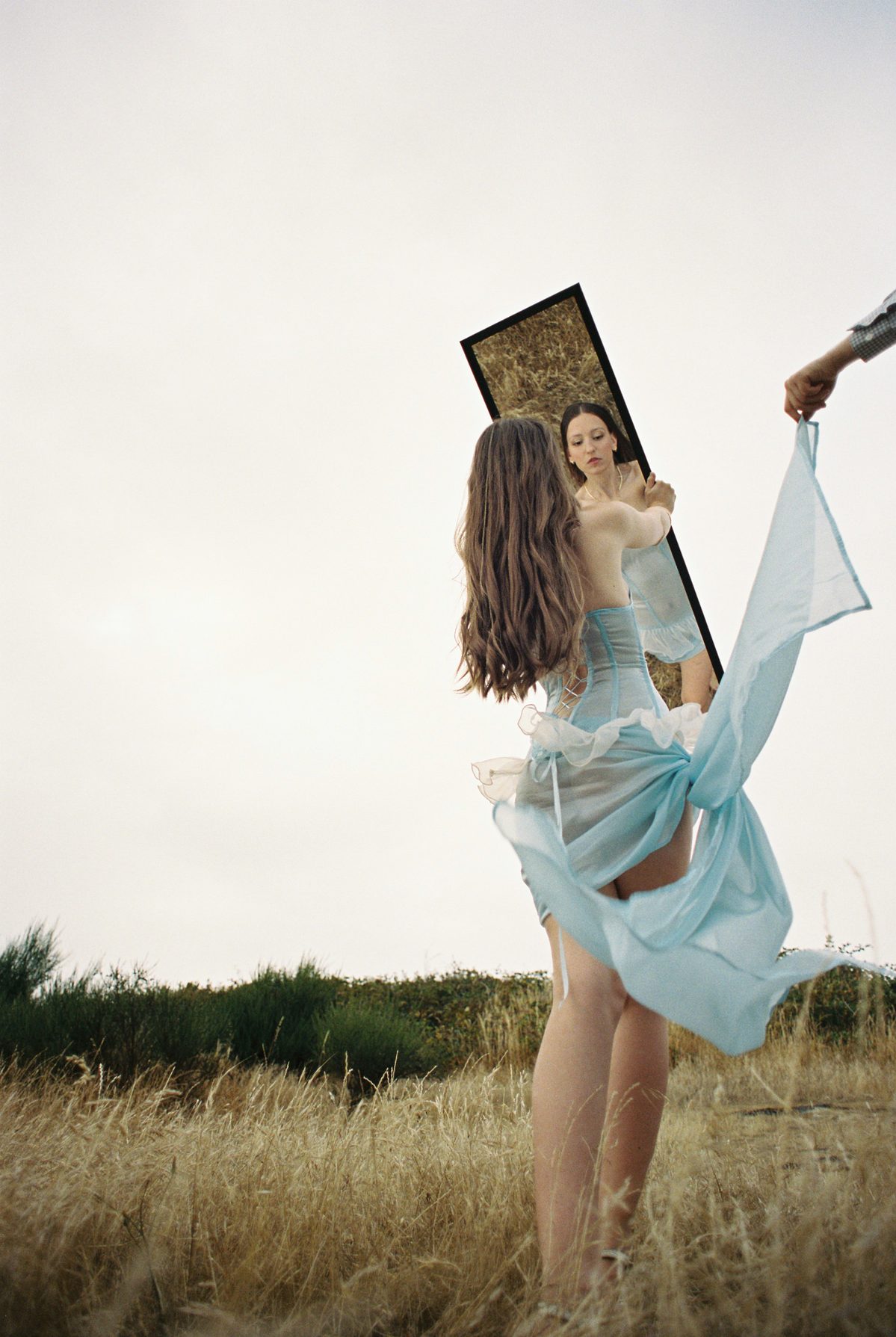
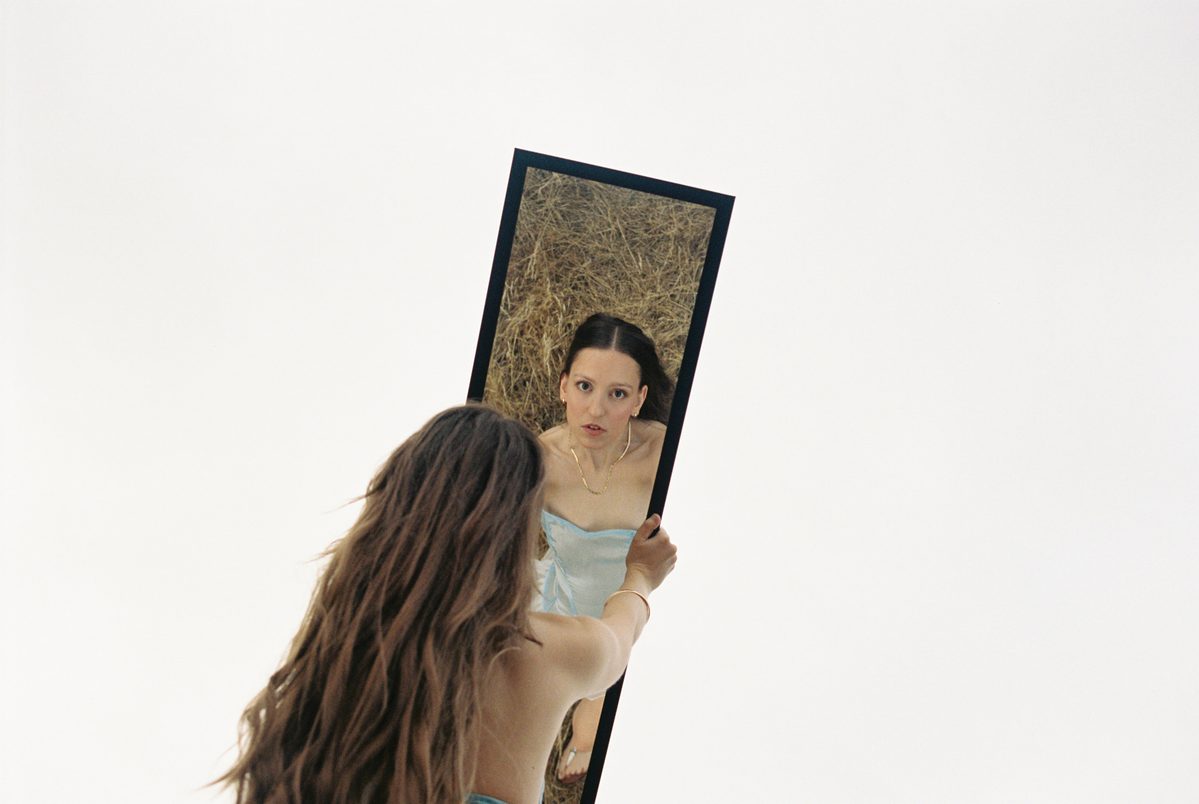
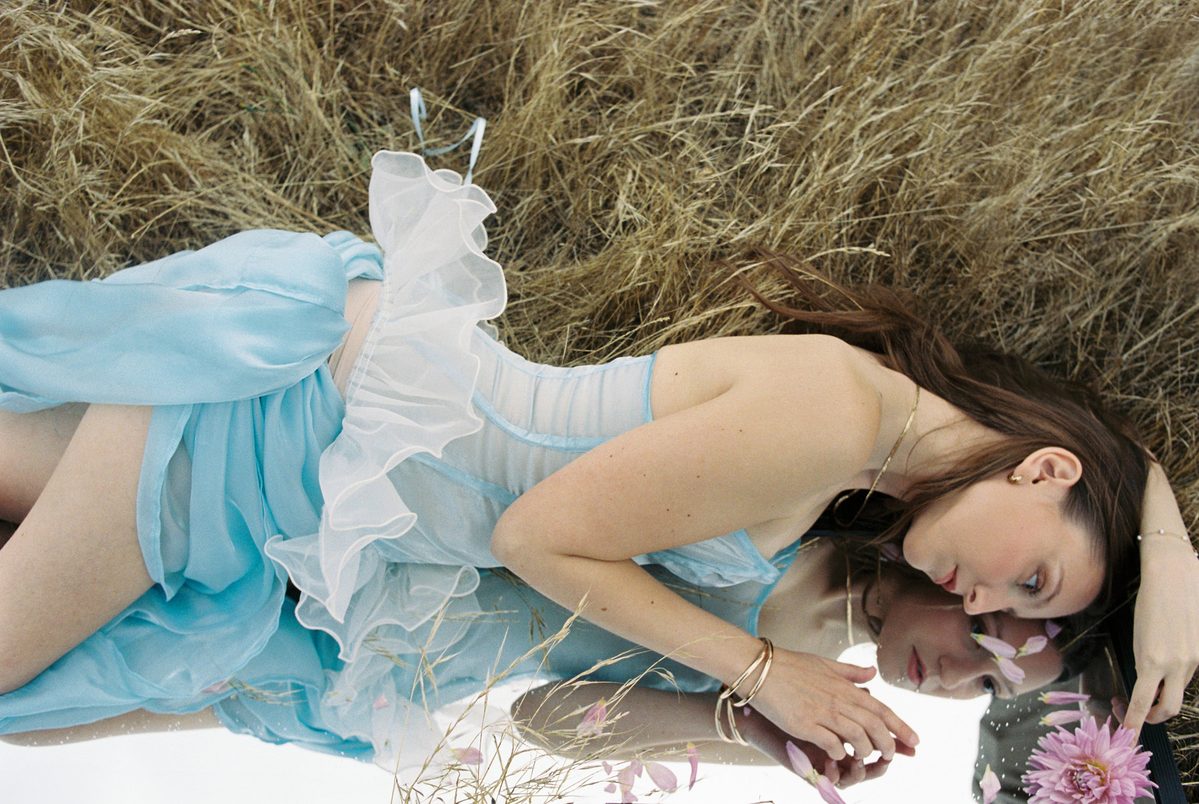
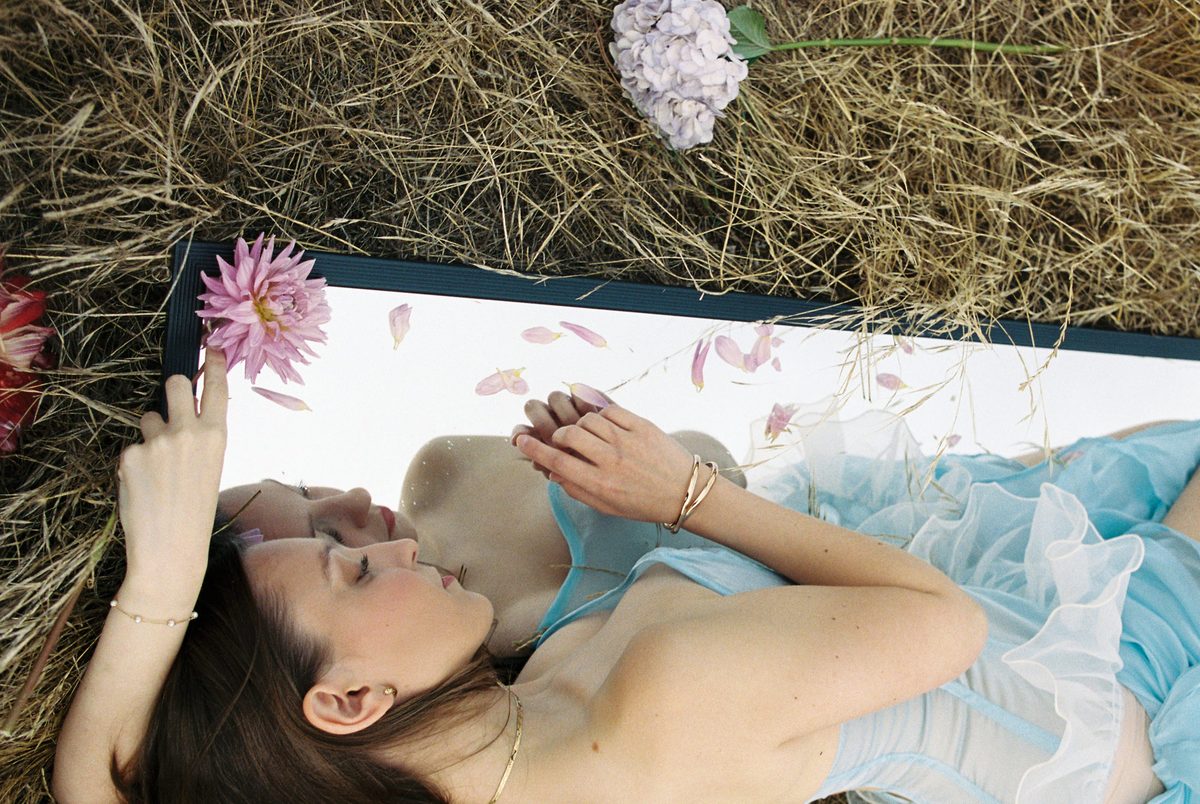
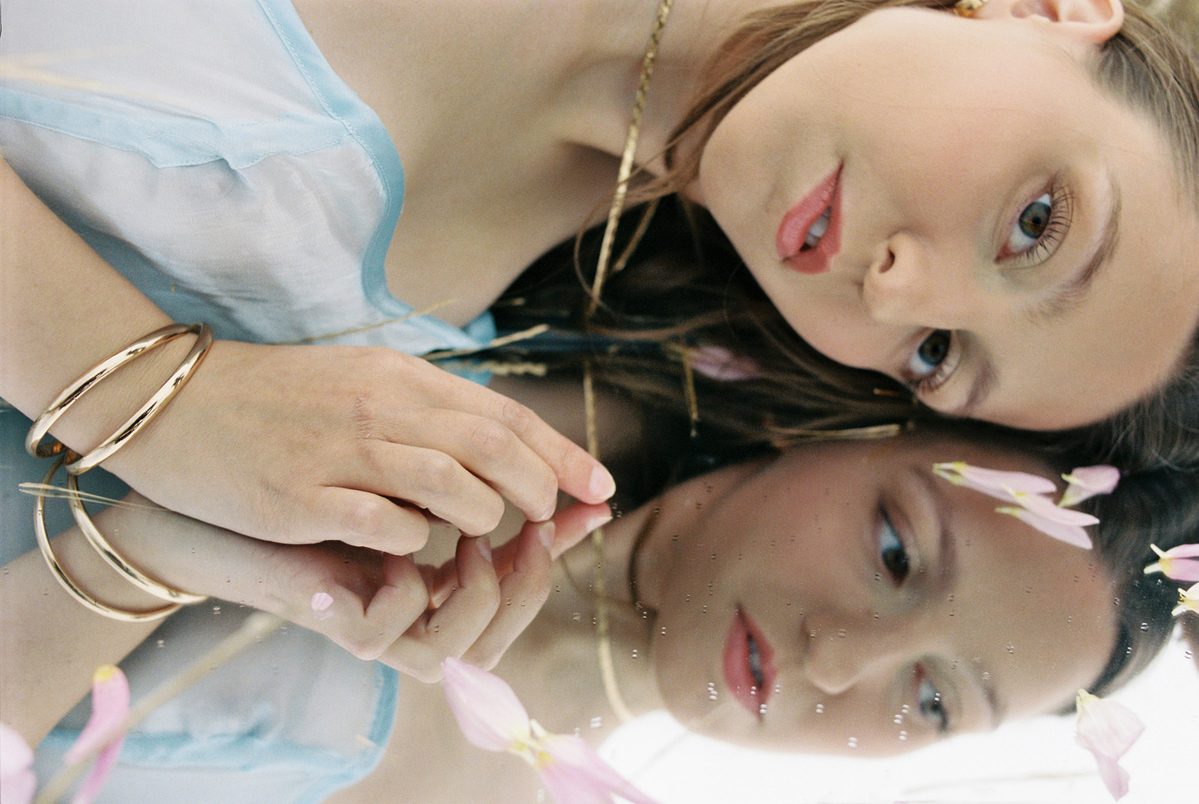
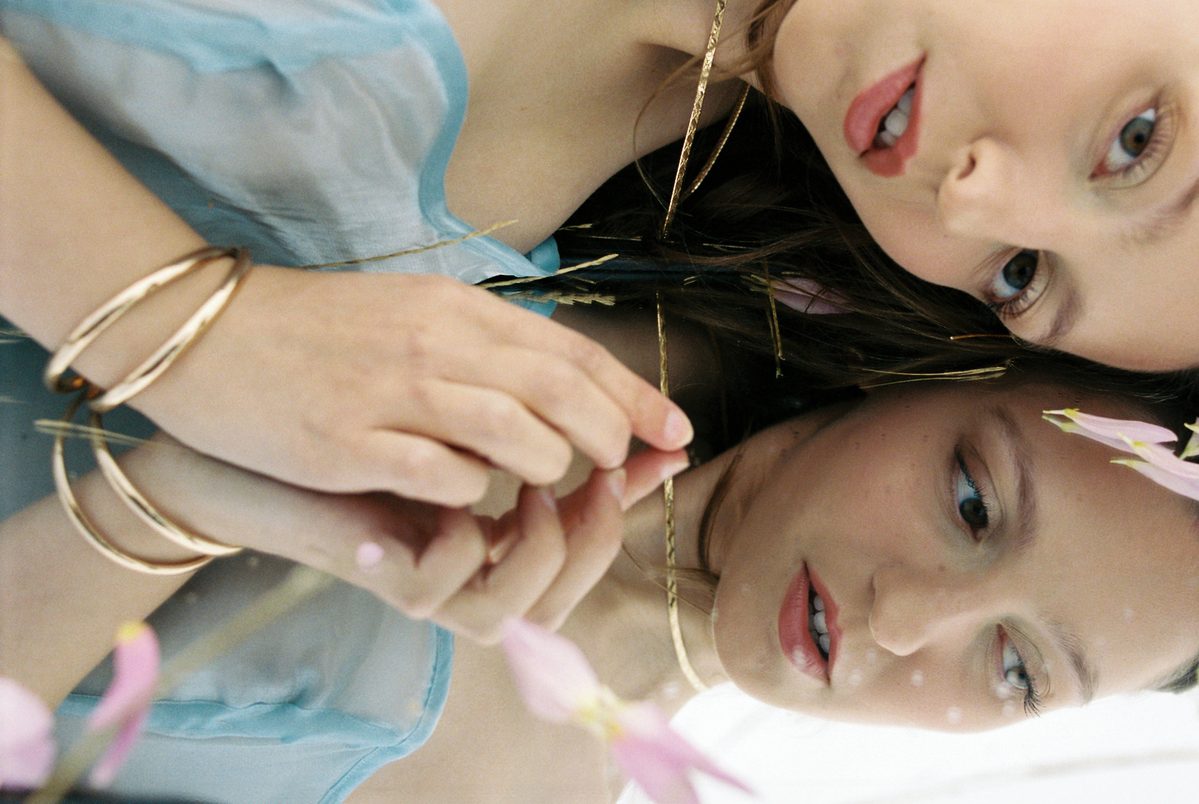
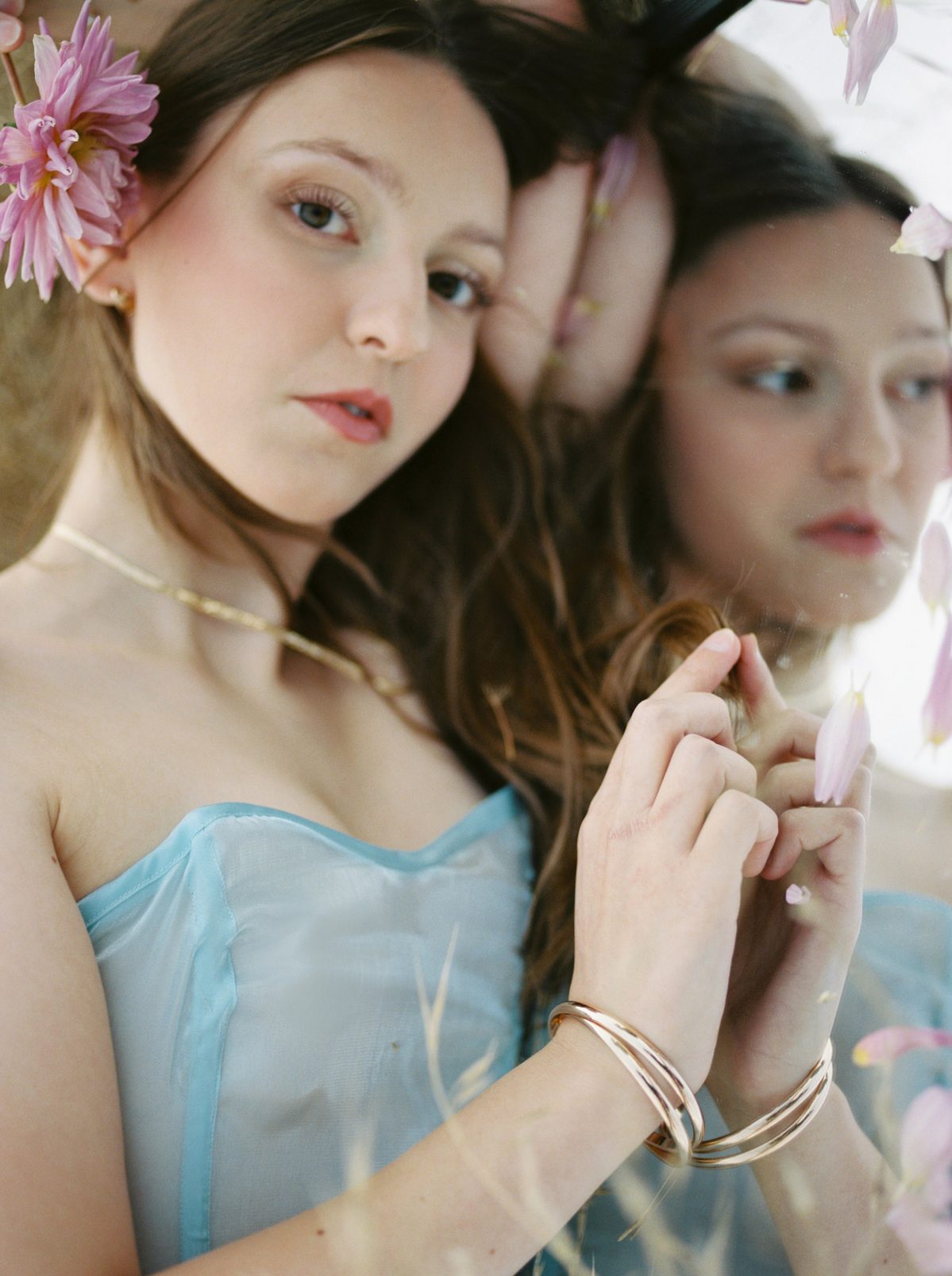
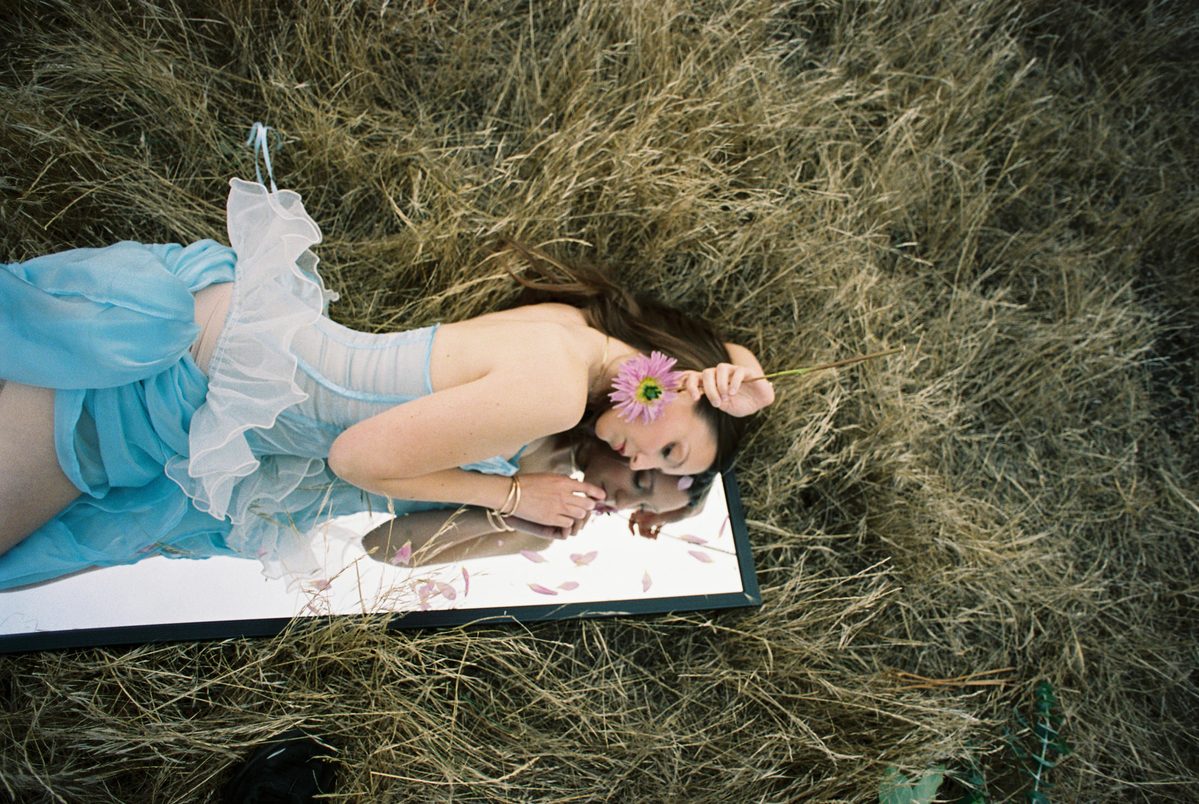
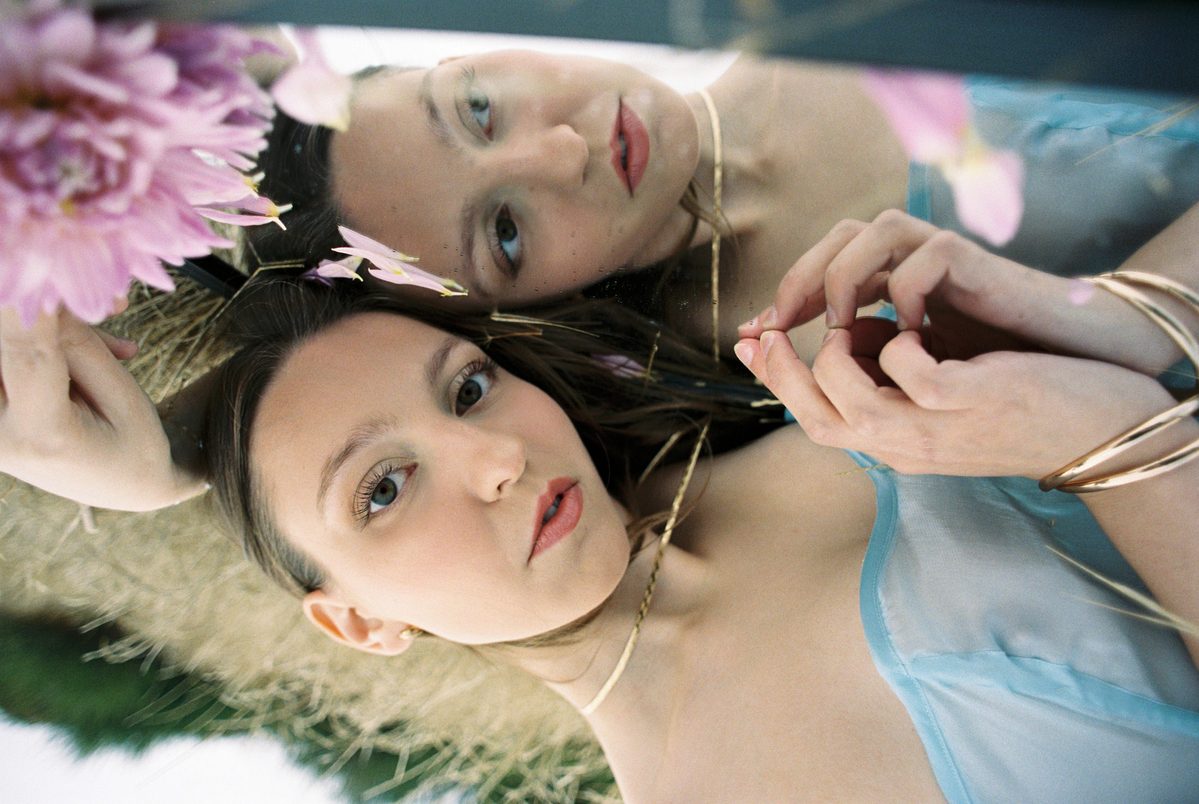
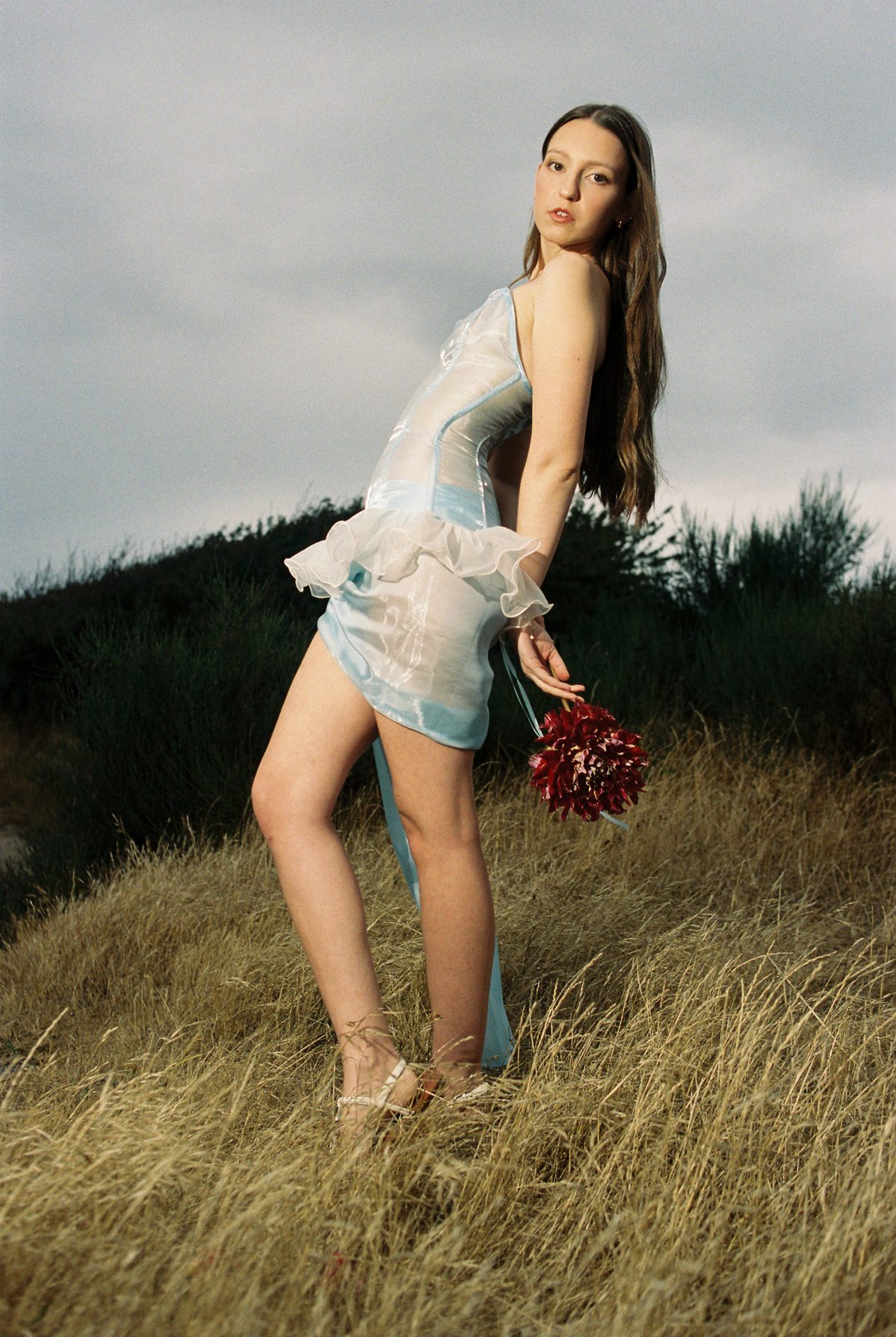
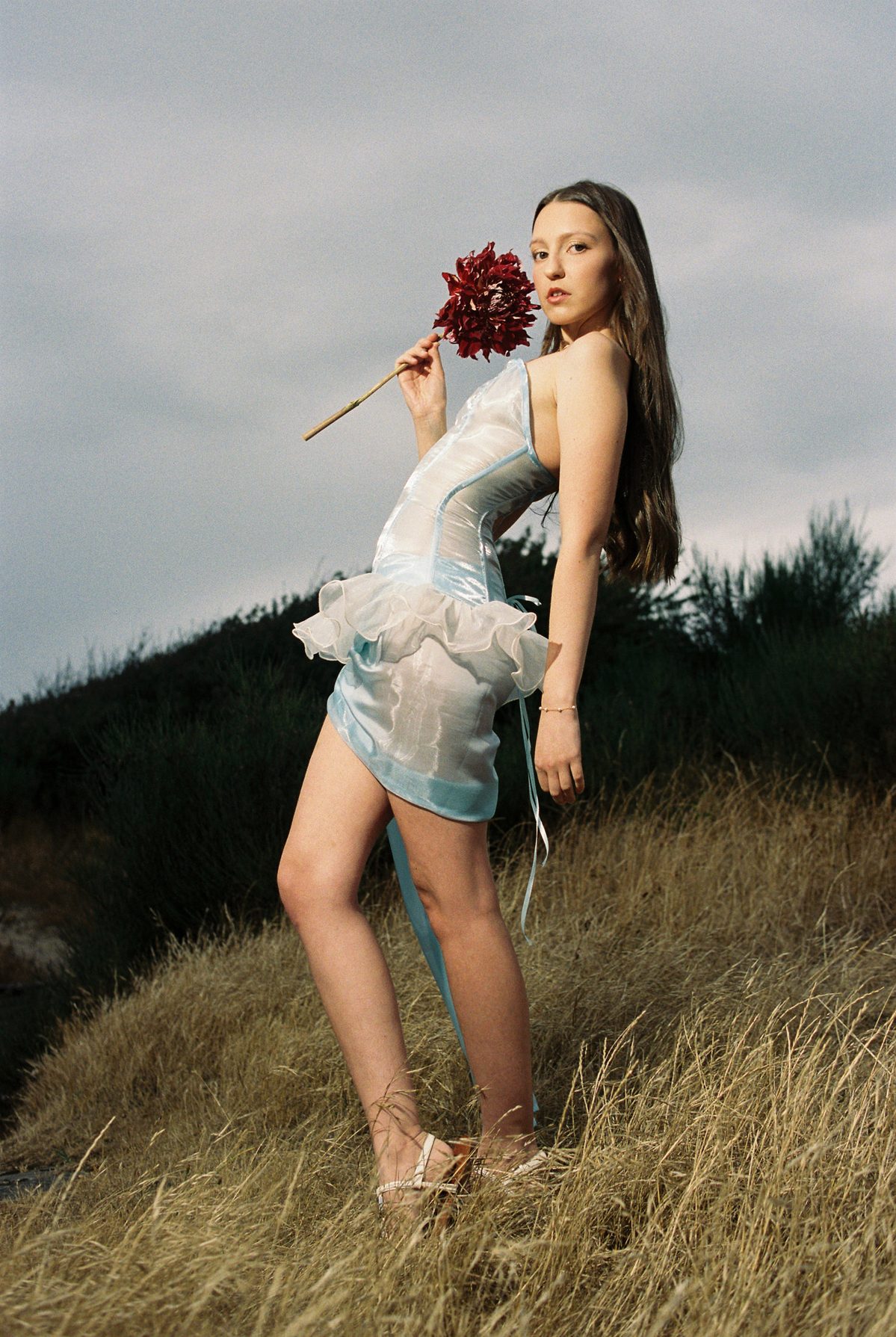
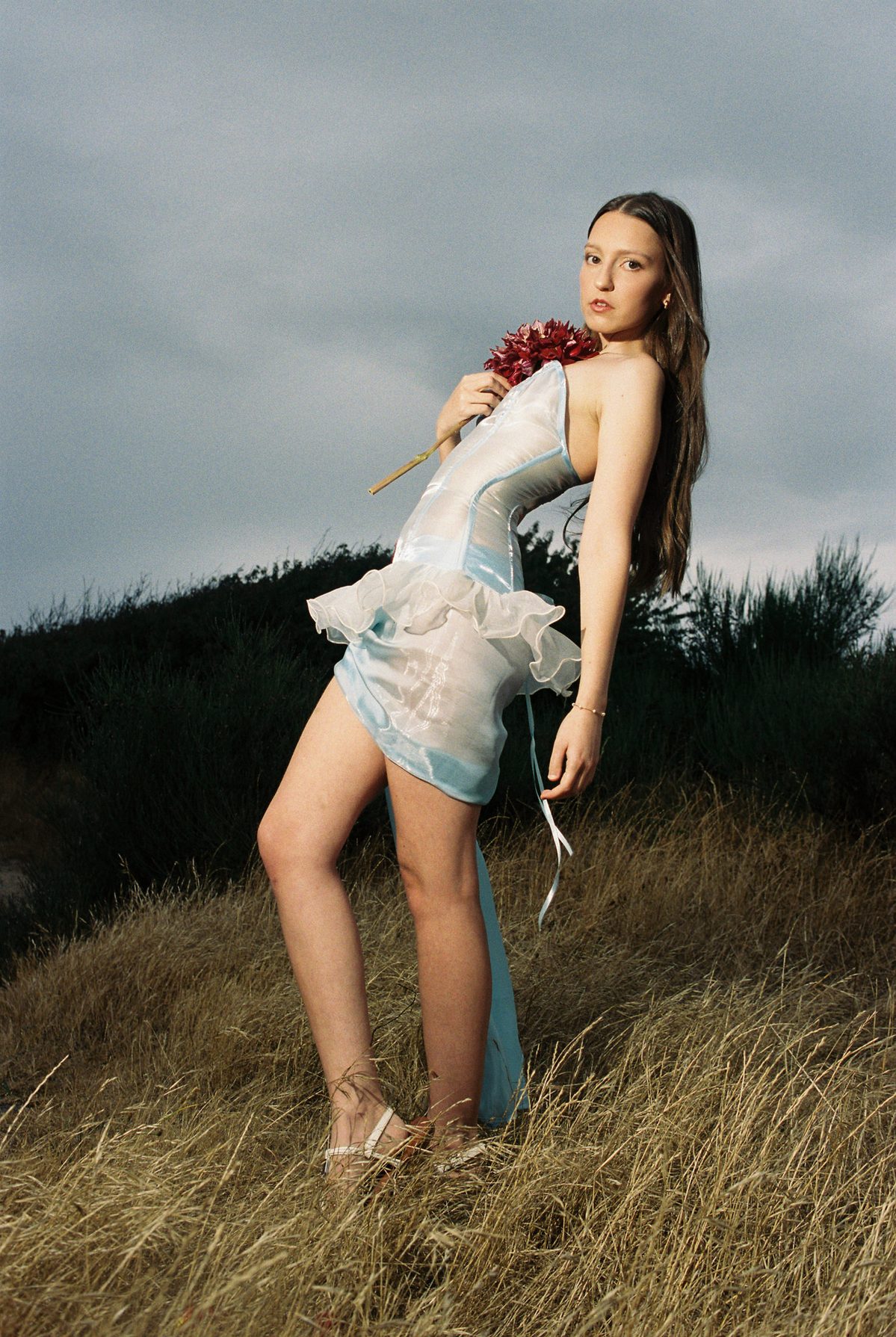
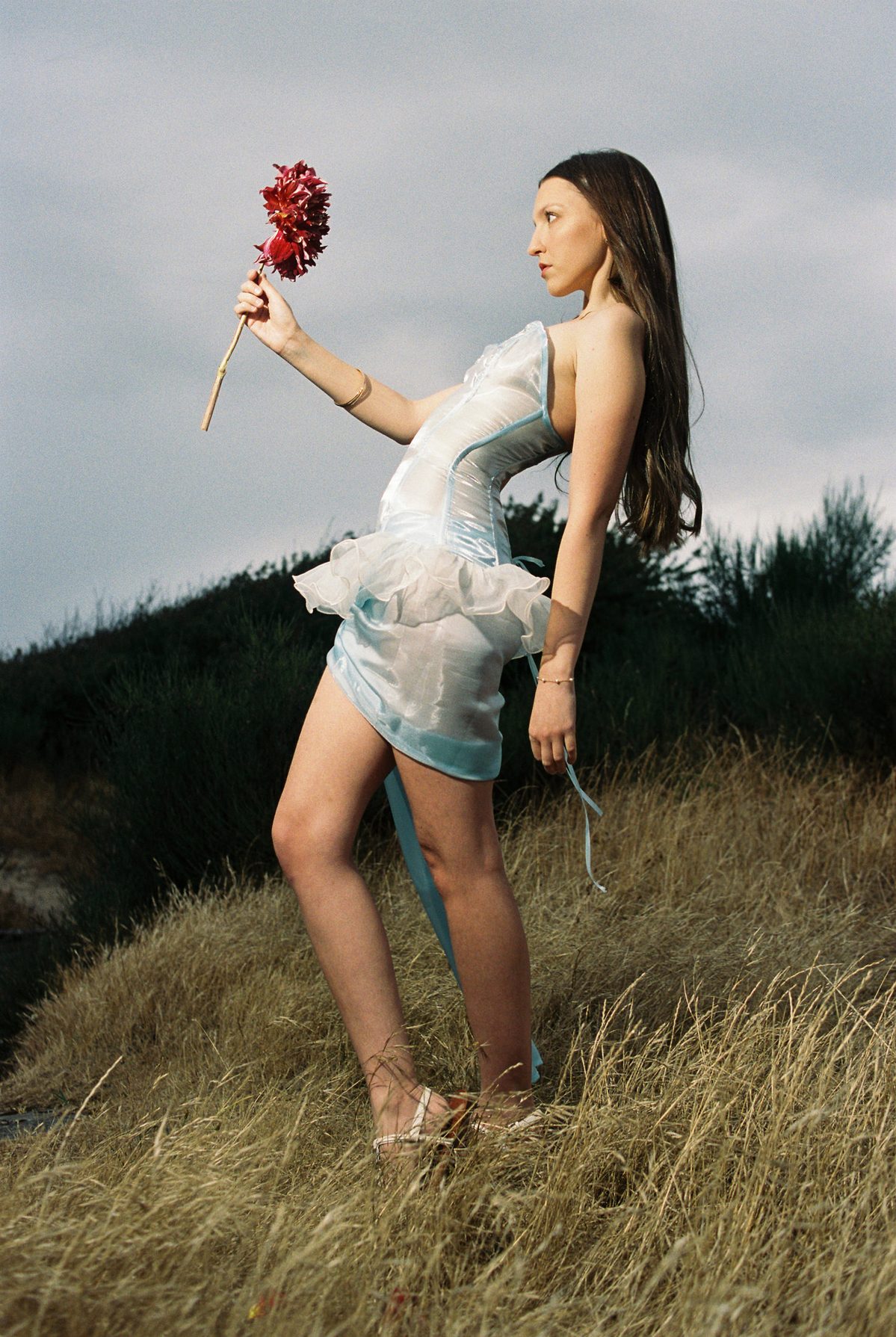
As you can see, blue hour really popped when I reduced my exposure, letting in a little bit less light (by about a full stop) and used the off-camera flash. Both of these images were taken in the same place, only a few seconds apart.
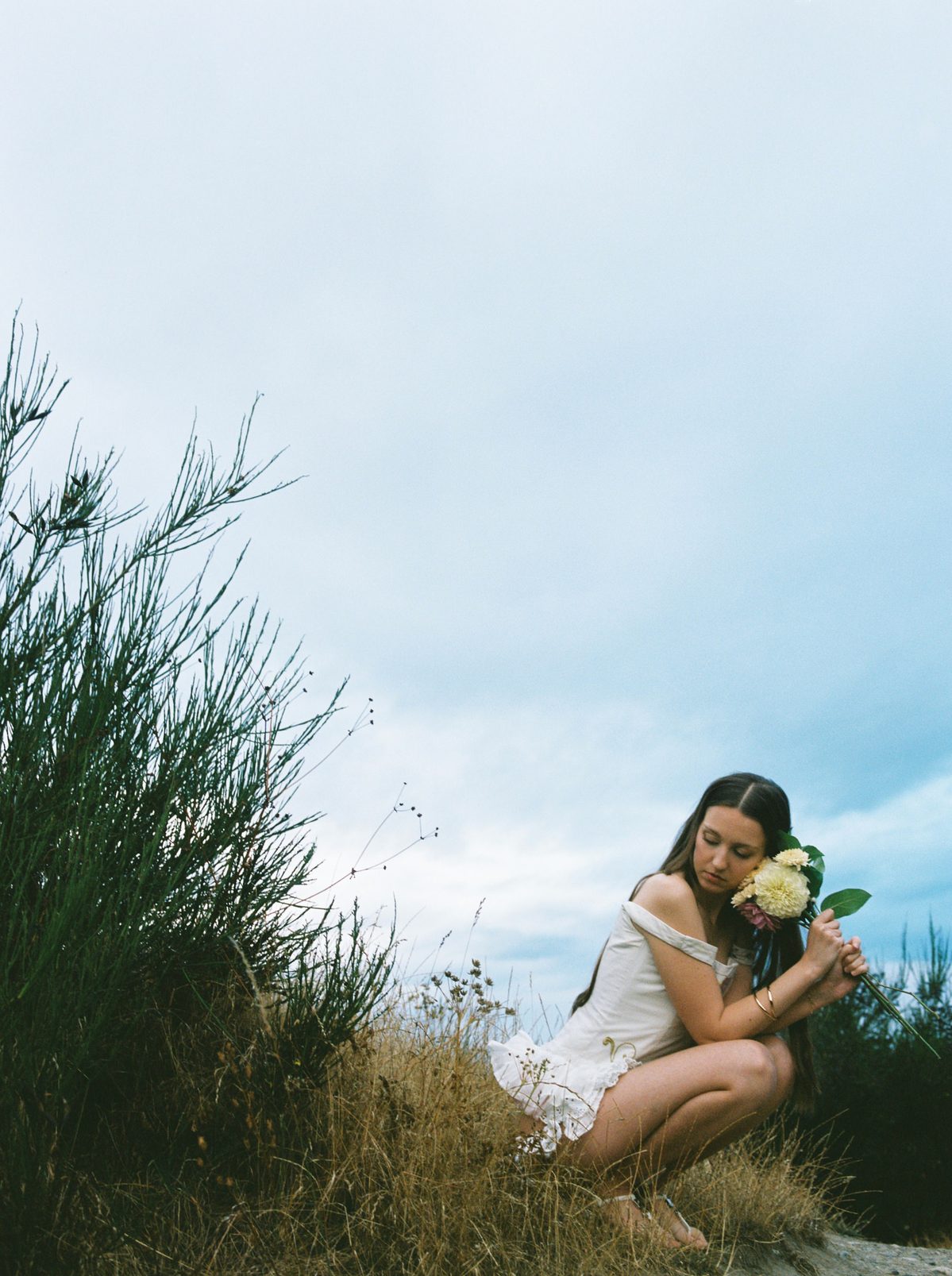
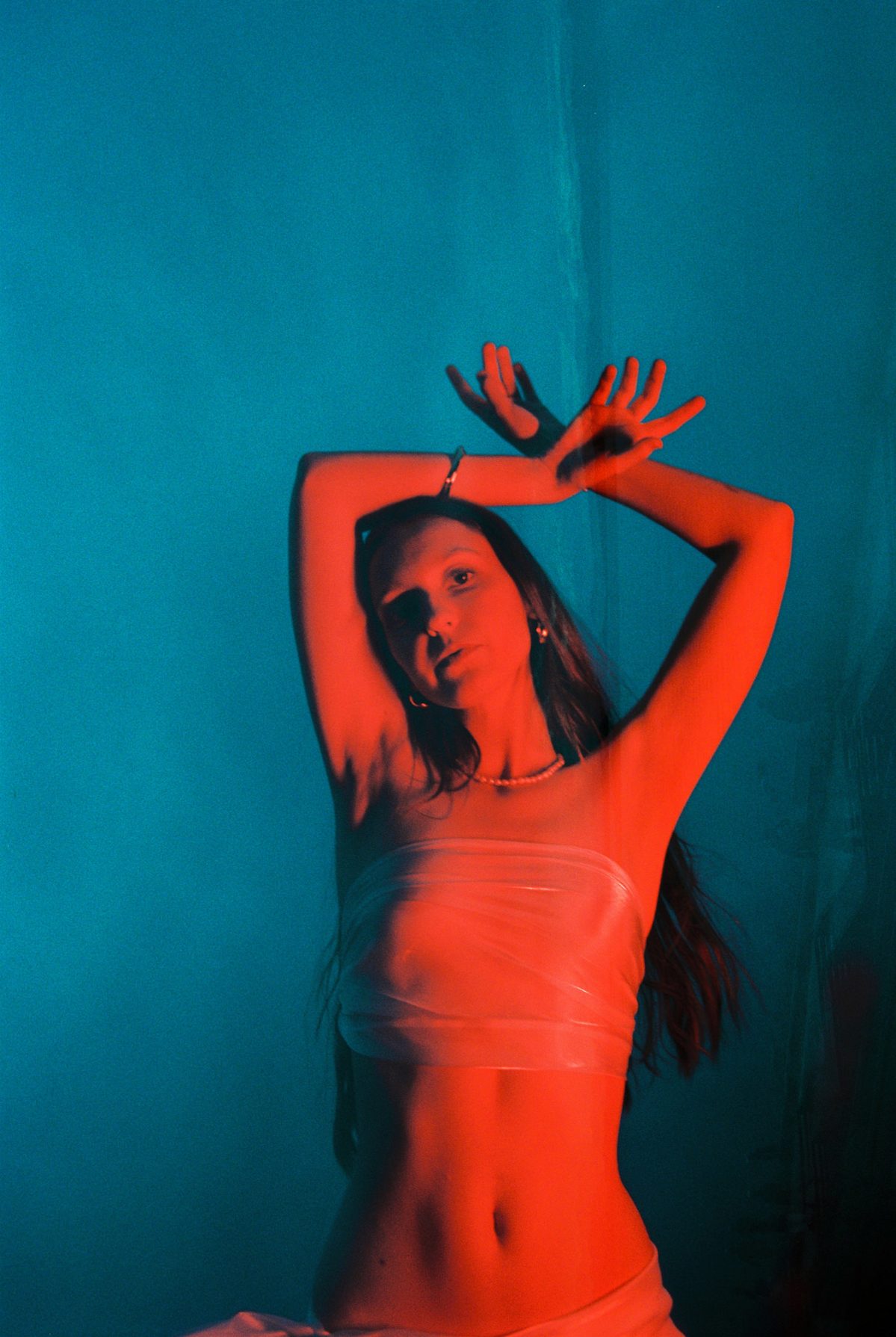
Another hitch giving me anxiety was that I only had a small LSD-coloured video light (maybe about 15watts) and the 30 watt Neewer Inflatable Coloured Wand Light (which just landed on my doorstep that morning). That’s not a whole lot of extra lighting for a shoot at blue hour. And, as I mentioned before low light + analog film = doesn’t always cooperate. To let in more light I shot lots of exposures at 1/15th sec and I may have even slowed down to 1/8th of a sec here and there.
Below, you can see the difference between under- and over-exposing during the same timeframe.
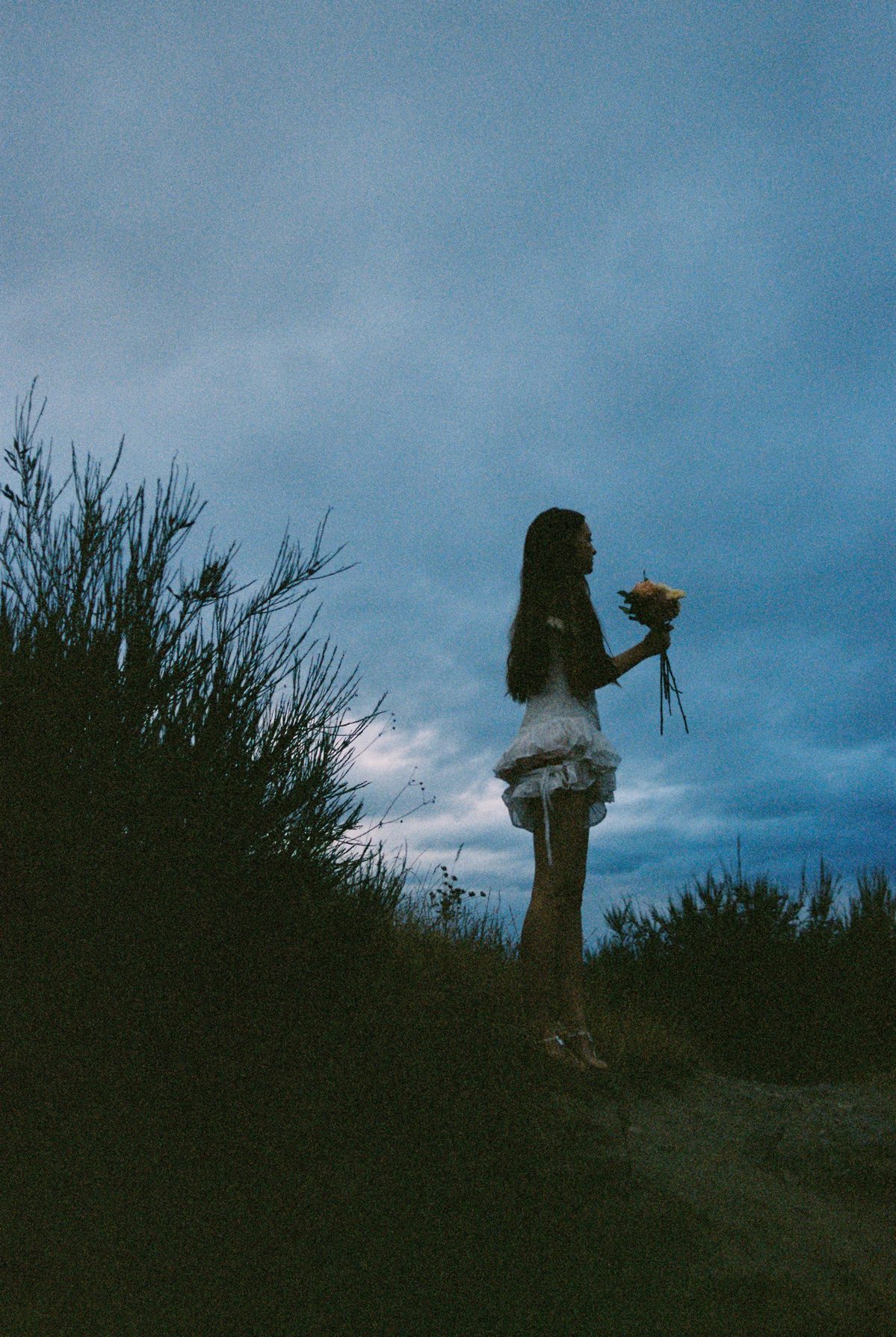
The photo below was probably about 1/8th of a sec and, to be honest, I quite liked the blur caused by my hand-shake. This was probably around the last few minutes there was enough light to have an evenly-lit scene using natural light only. Without compensating with slower shutter speeds, flash, multiple exposures or video lights, all the photos below would look like the dark, grainy blue hour shot you see above-left.
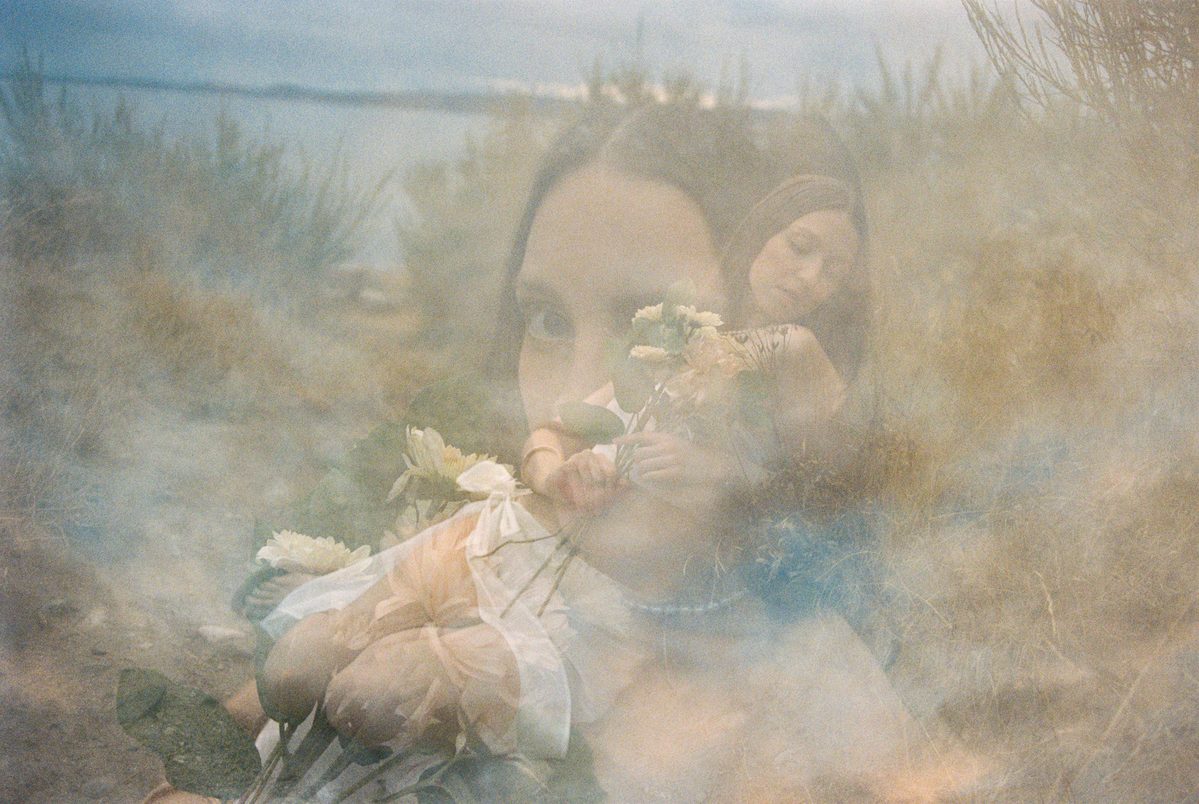
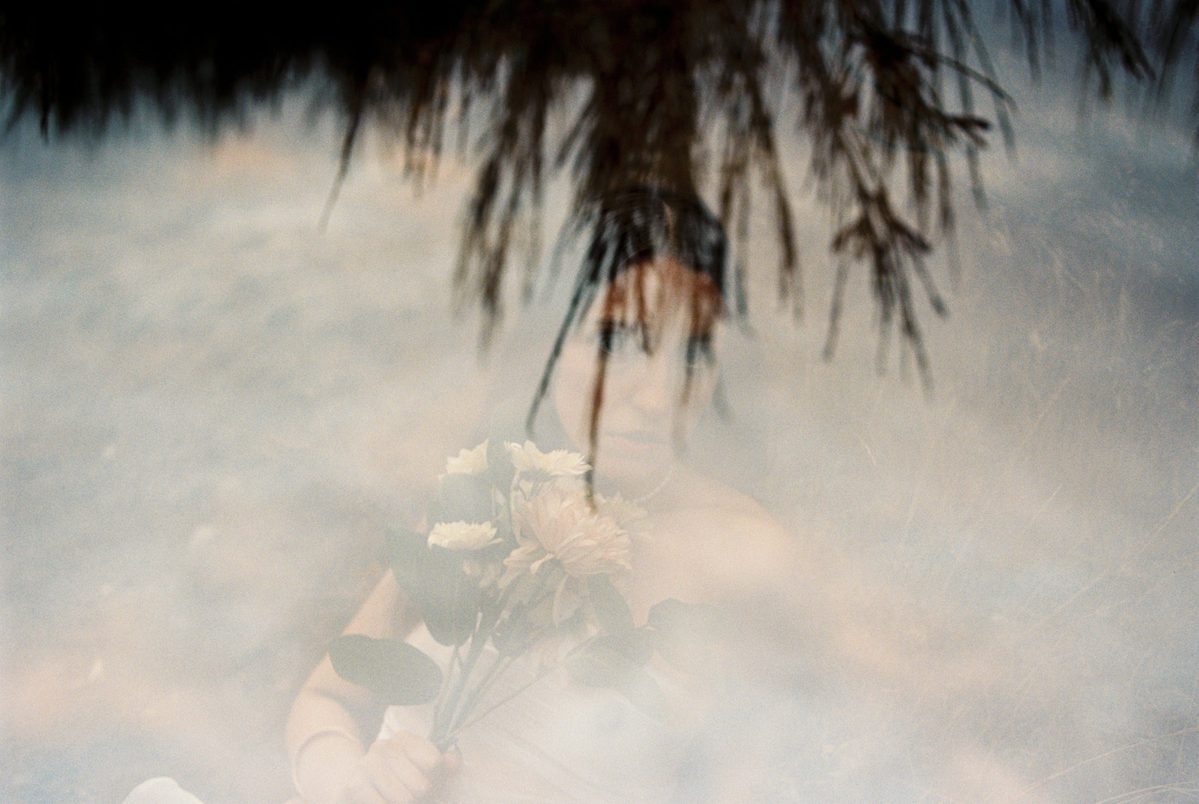
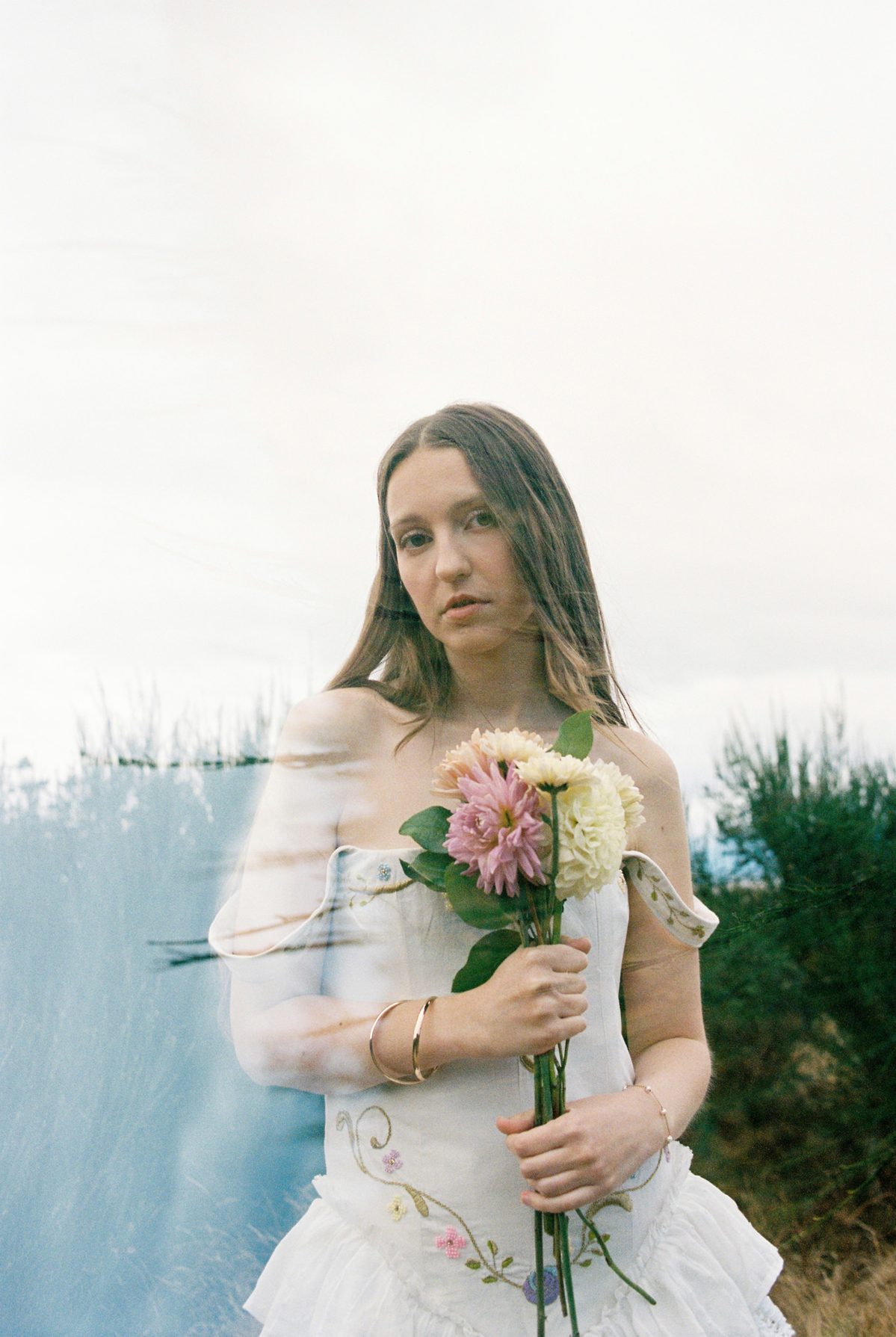
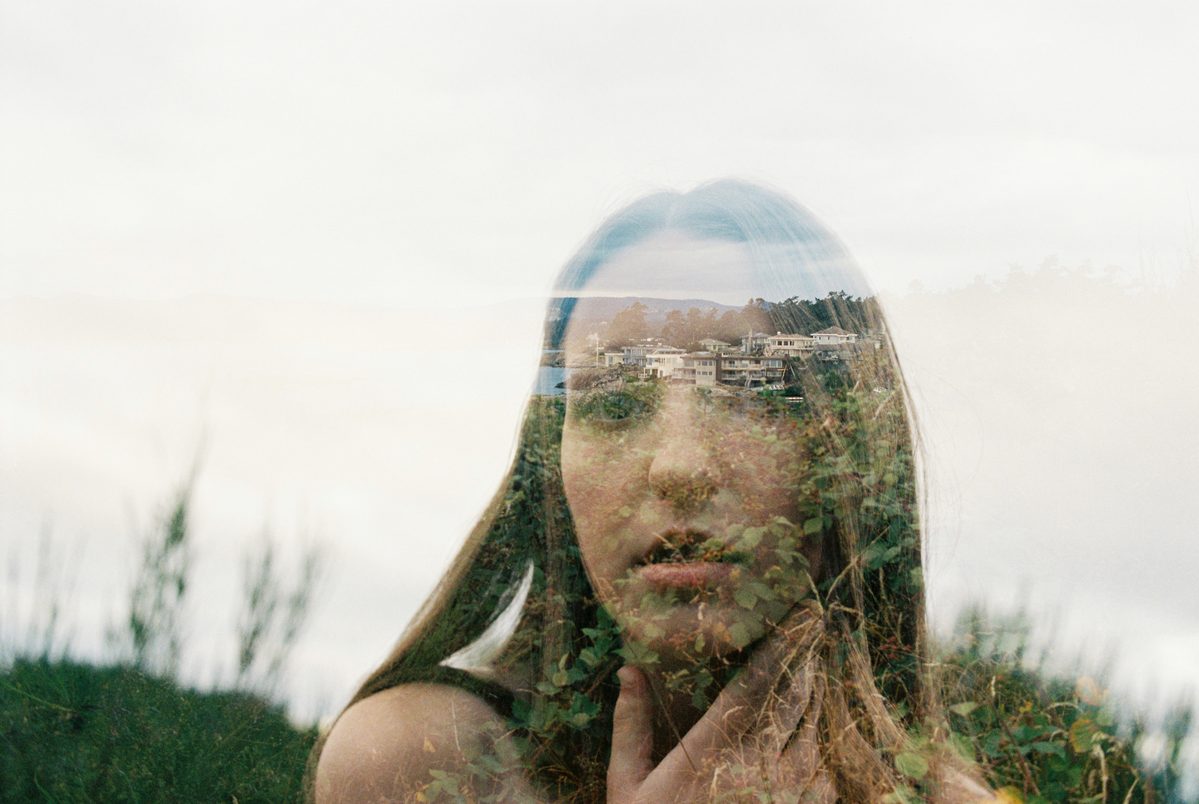
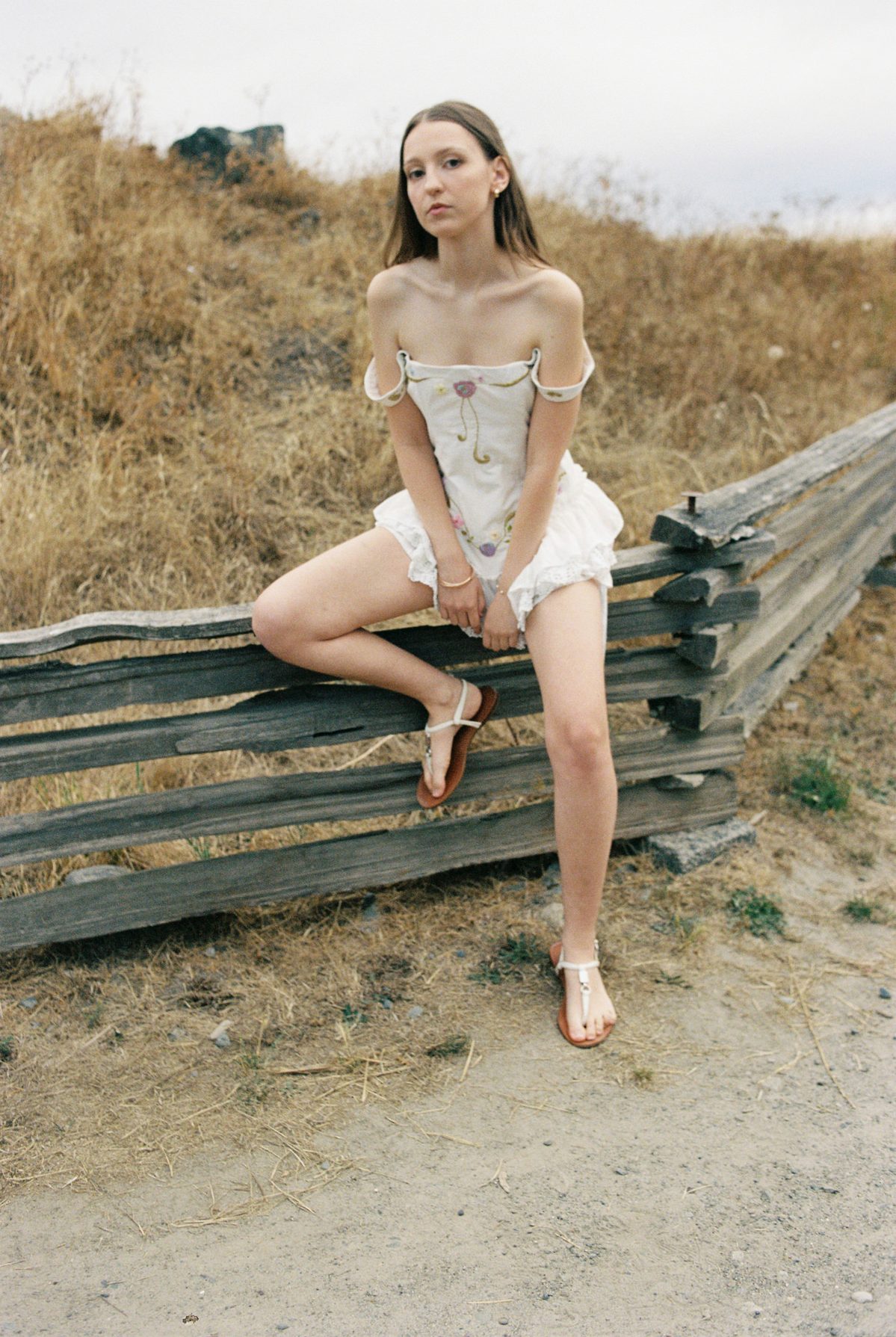
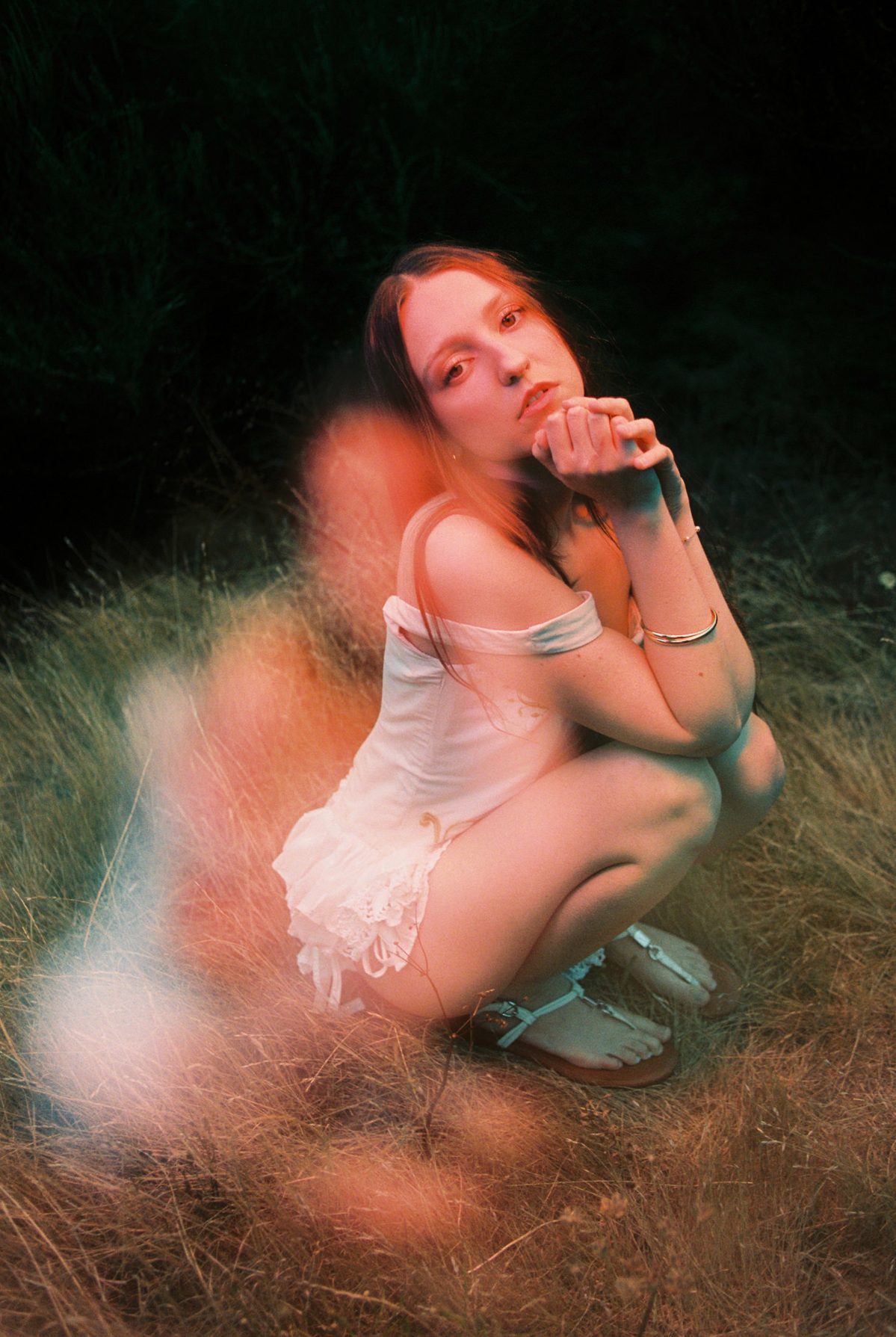
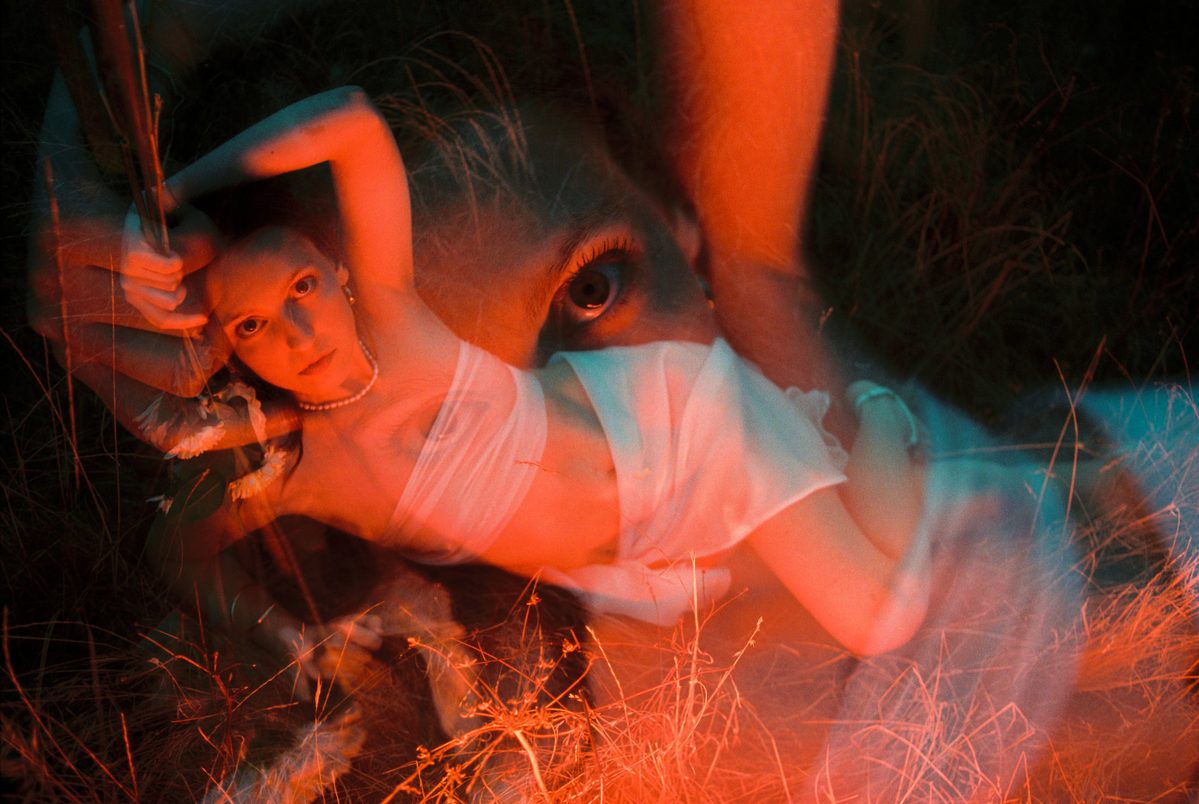
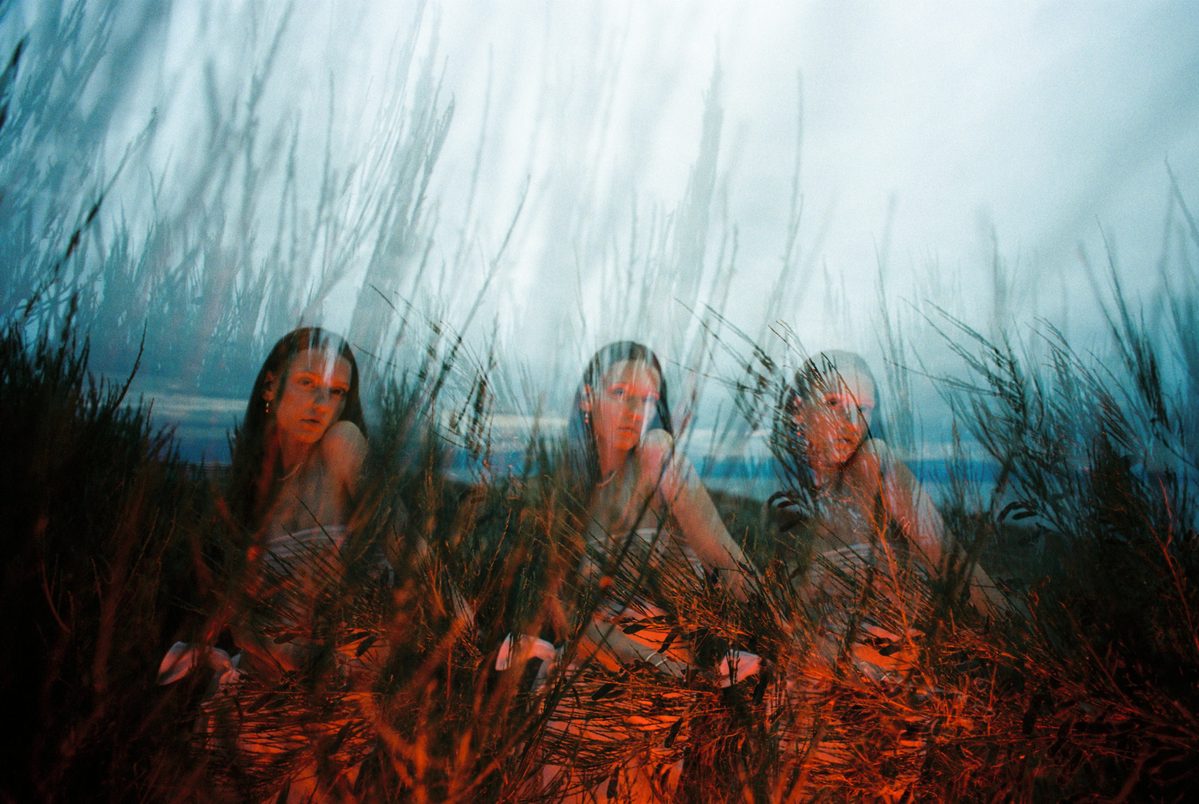
The last photo was a double exposure. The first click was intentionally blurry and the second click was intentionally in-focus to give it a bit of a glitch effect.
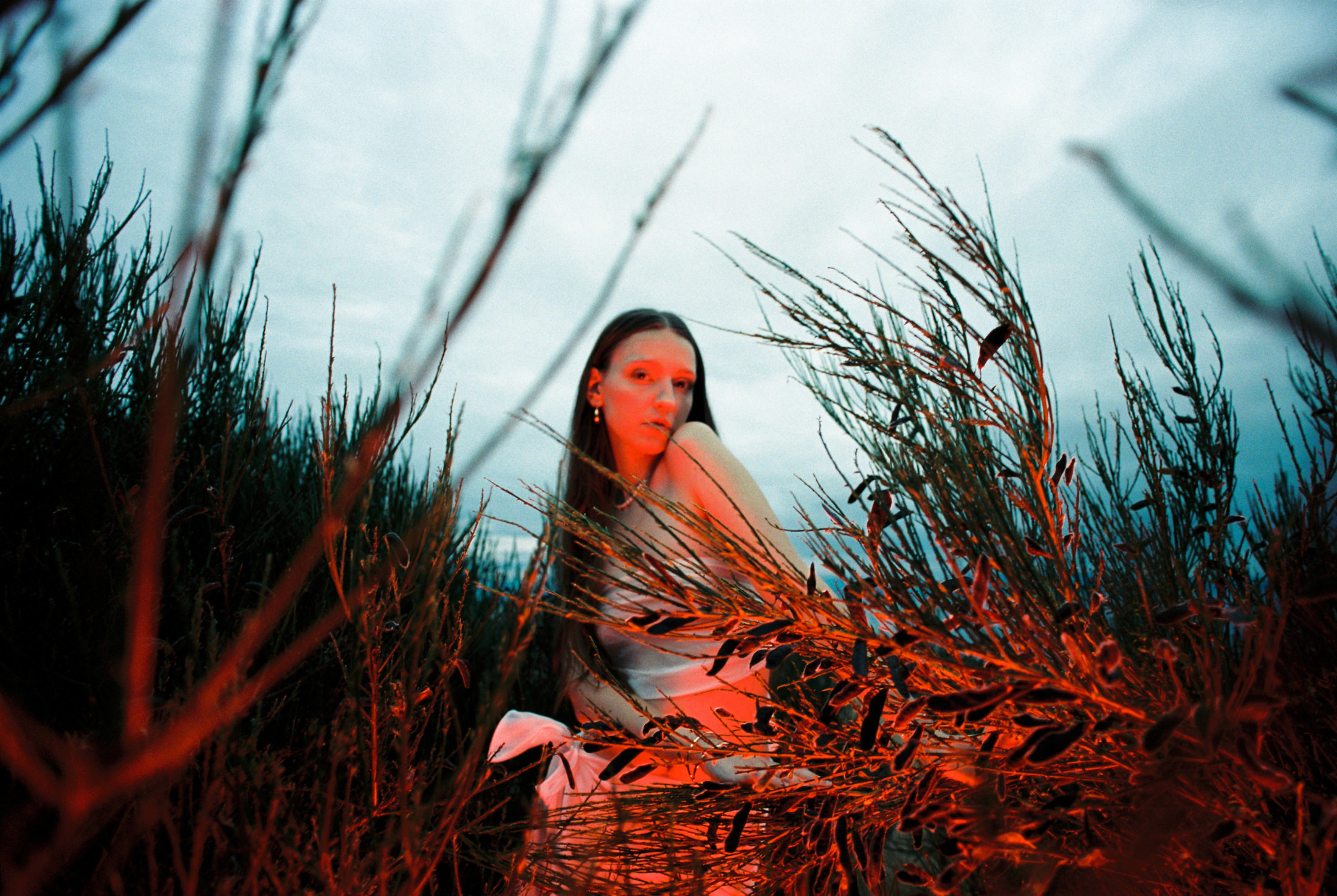
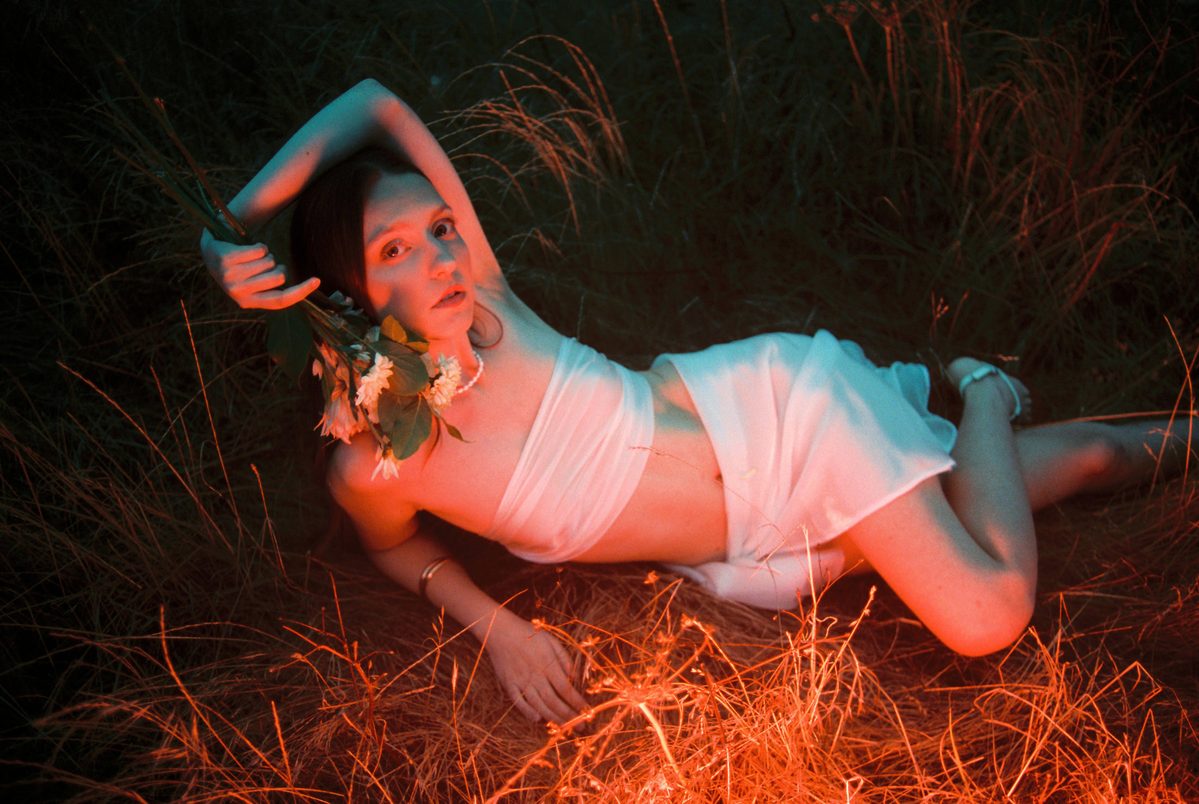
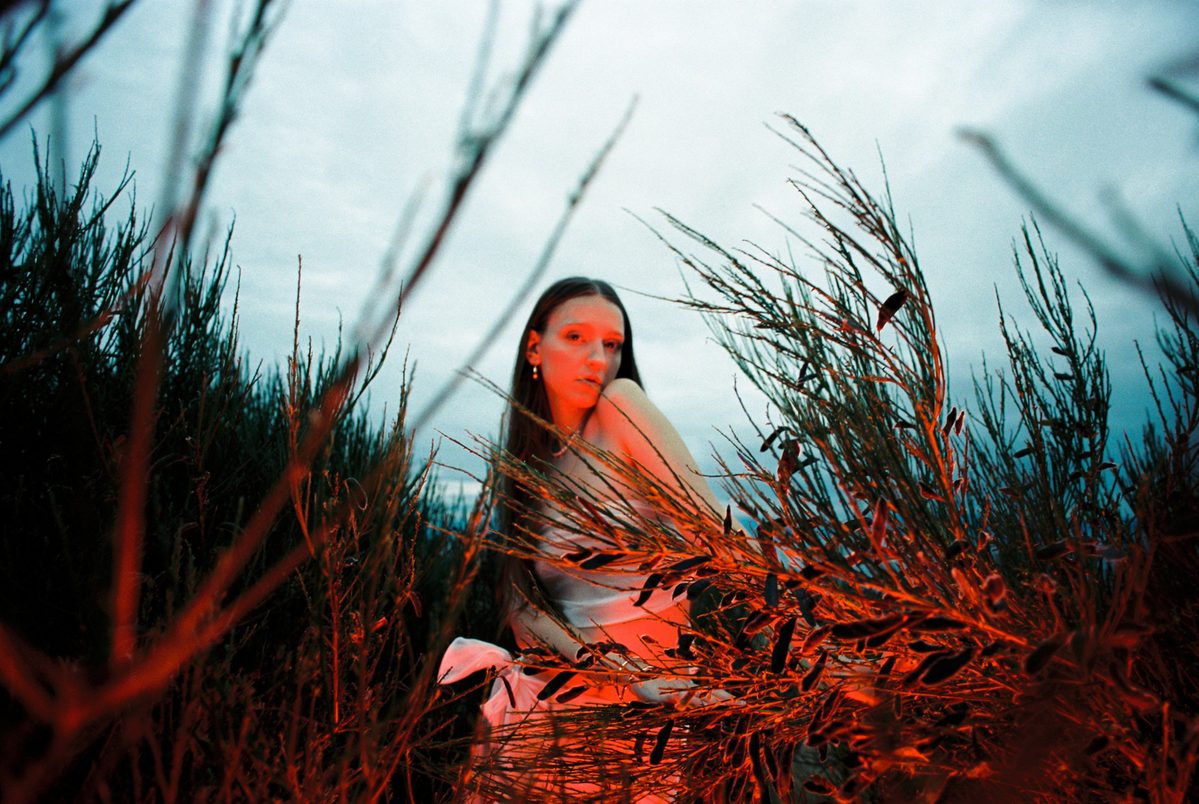
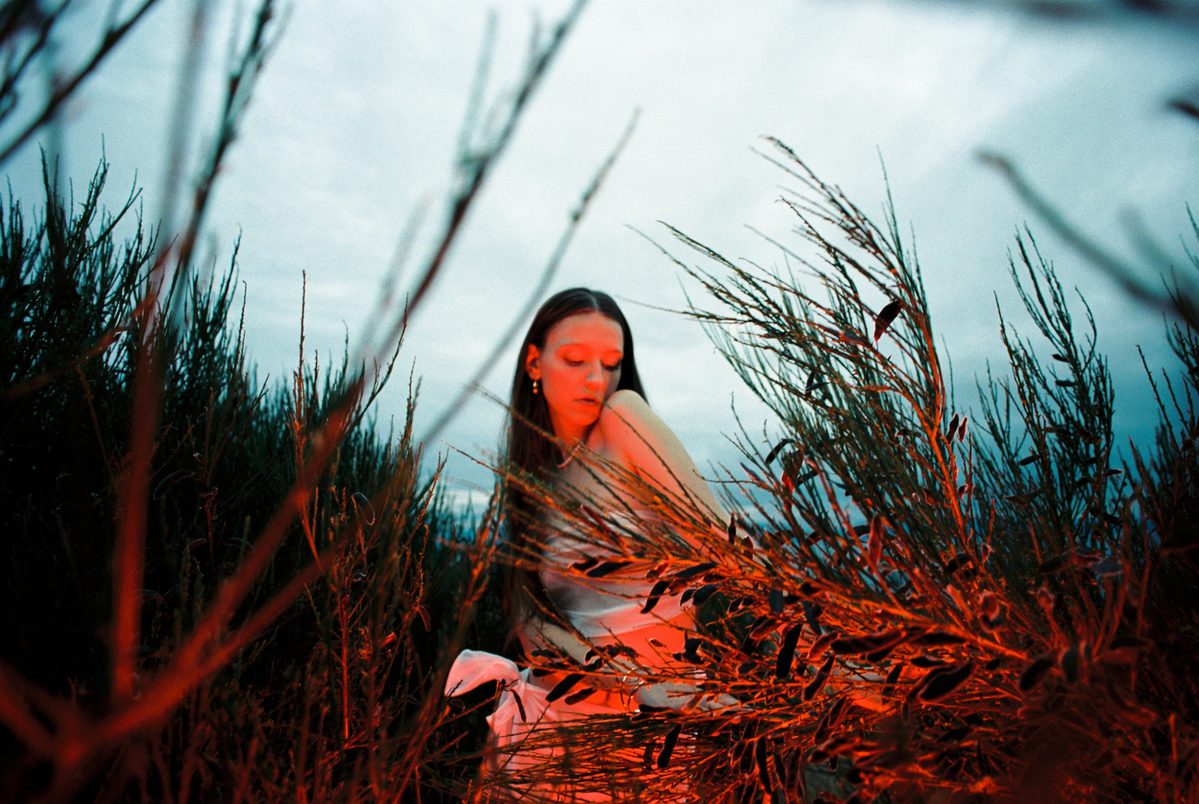
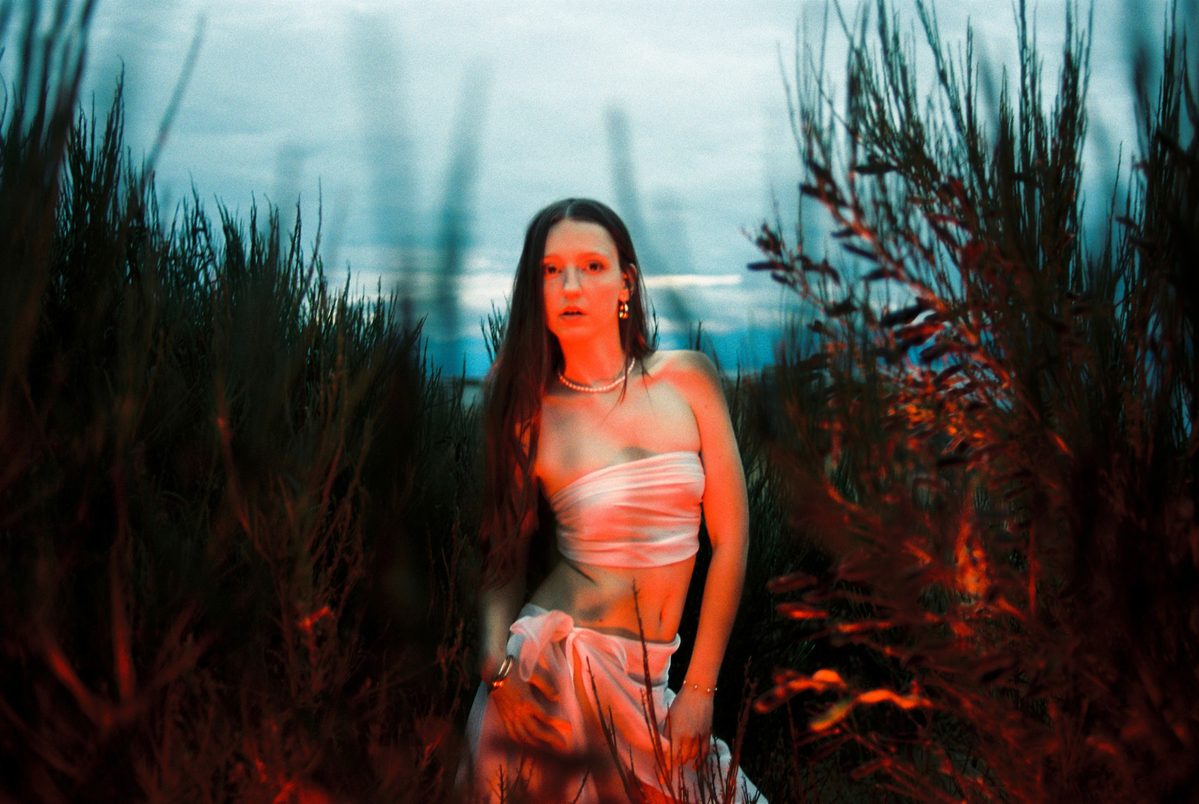
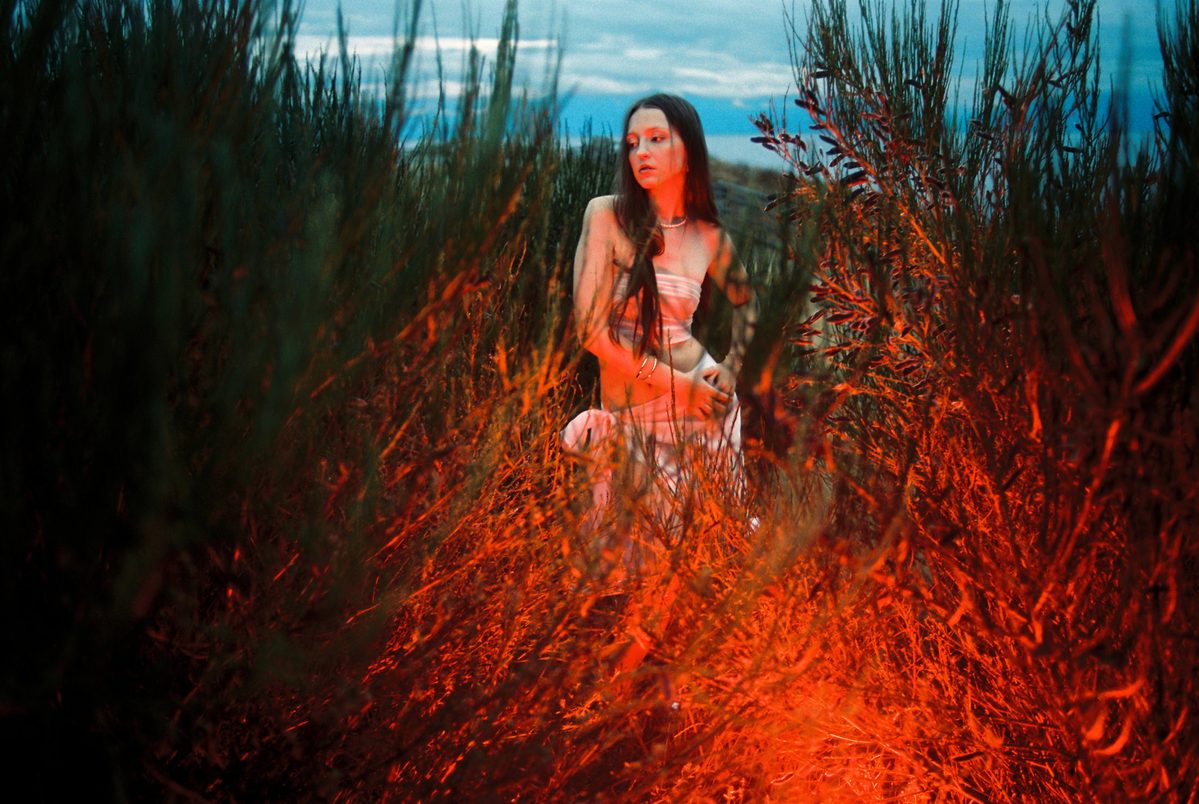
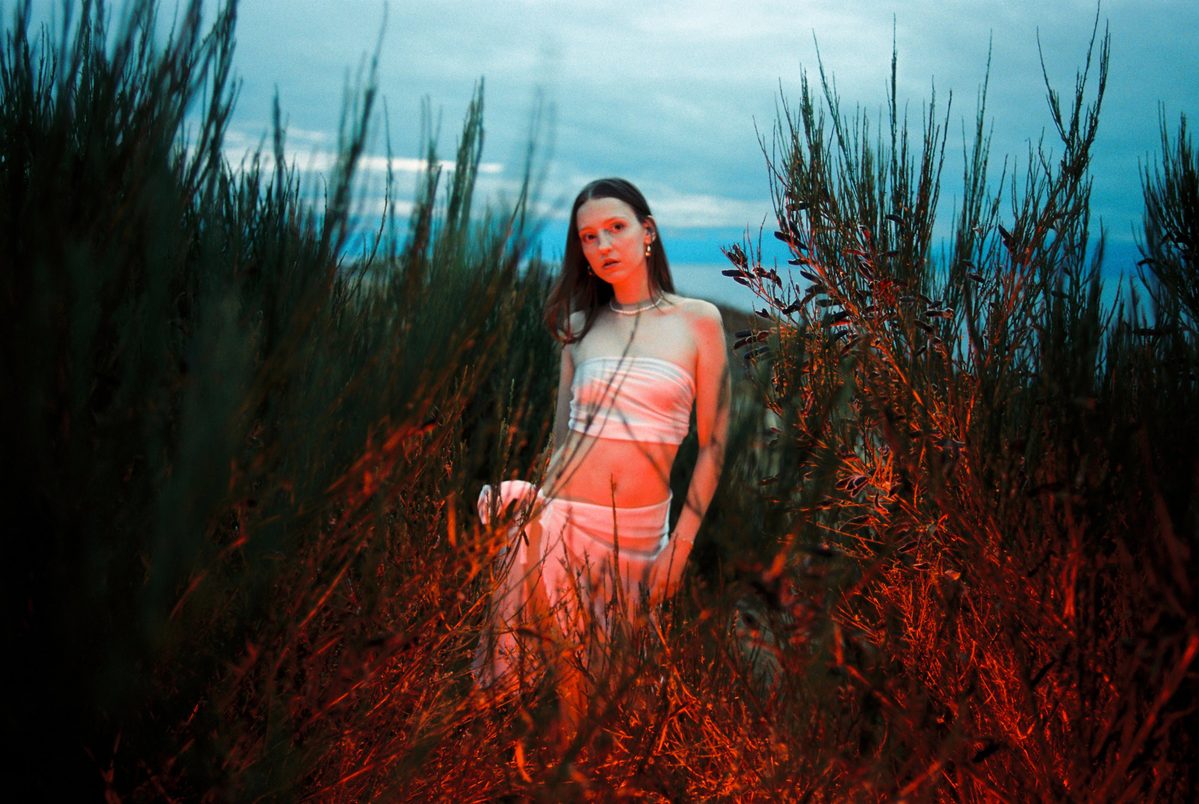
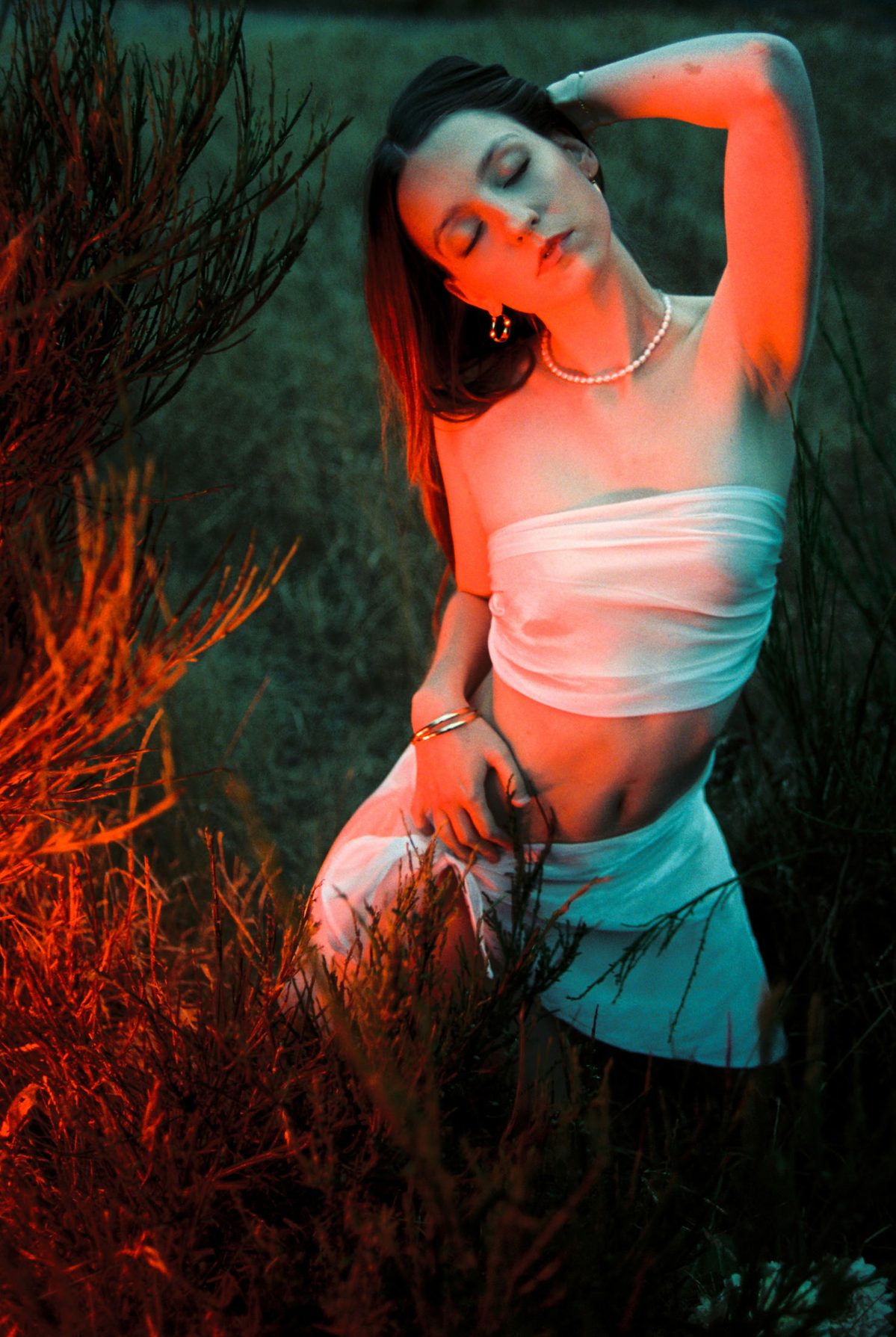
The next set were all taken within a few minutes of the photo above. By dialing down to underexpose the blue hour light really popped with the red from the Neewer wand light.
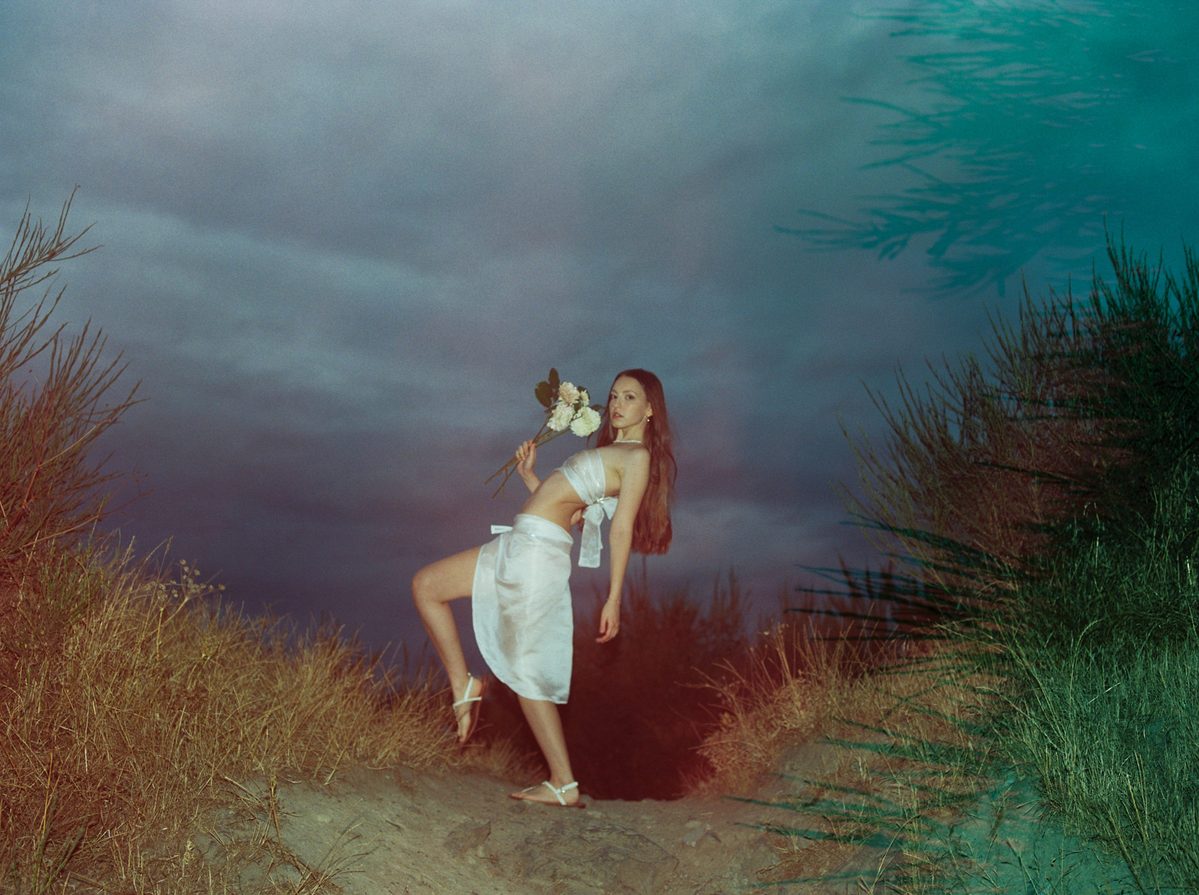
Fashion designer: Monet Marée
Model: Ana Ungureanuu
Cameras: Nikon n8008 35mm with 20mm, 35mm and 85mm prime lenses; and the Pentax 645nii medium-format with mostly the 75mm 2.8 autofocus lens and the manual-focus 105mm f4.